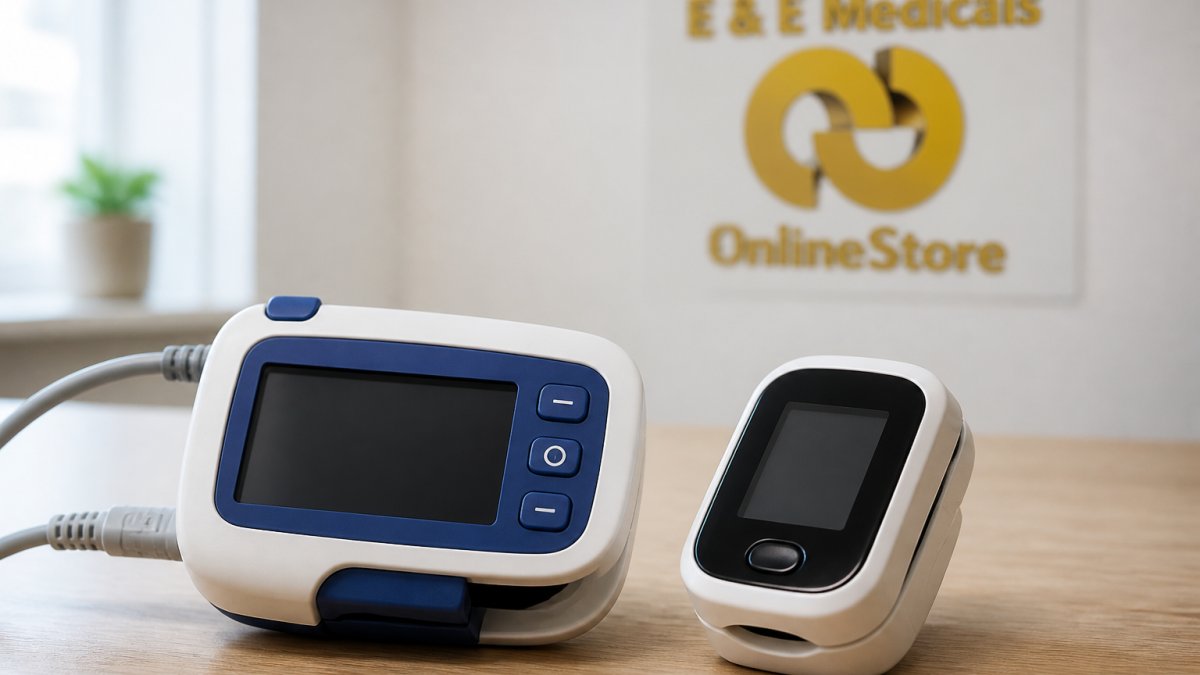
 comparison
Clinical vs Consumer Pulse Oximeters: Key Differences
Table of Contents
- Clinical-Grade vs Consumer Pulse Oximeters: What Sets Them Apart
- How Pulse Oximeters Work: Photoplethysmography and Sensor Technology
- FDA-Cleared Pulse Oximeter Requirements and Regulatory Standards
- Accuracy in Diverse Patient Populations: Skin Tone Bias and Clinical Validation
- Limitations of Home Pulse Oximeters and When Professional-Grade Matters
- Clinical-Grade Devices: Hospital Standards and Professional Use Cases
- Choosing the Right Pulse Oximeter for Your Practice or Facility
- Frequently Asked Questions
Last Updated: October 2, 2026
Clinical-Grade vs Consumer Pulse Oximeters: What Sets Them Apart
The difference between a clinical grade pulse oximeter and a consumer model isn't just price. It's accuracy, reliability, and whether your readings hold up when they matter most. Clinical-grade pulse oximeters meet rigorous FDA standards and deliver consistent performance across diverse patient populations. Consumer models offer convenience for wellness tracking but lack the validation required for medical diagnosis.
This guide breaks down the technical differences, regulatory standards, and real-world limitations that separate these two categories.
How Pulse Oximeters Work: Photoplethysmography and Sensor Technology
Photoplethysmography uses red and infrared light to measure oxygen saturation (SpO2) by detecting how much light passes through blood in the fingertip. Hemoglobin absorbs light differently depending on whether it's carrying oxygen, allowing the sensor to calculate saturation levels.
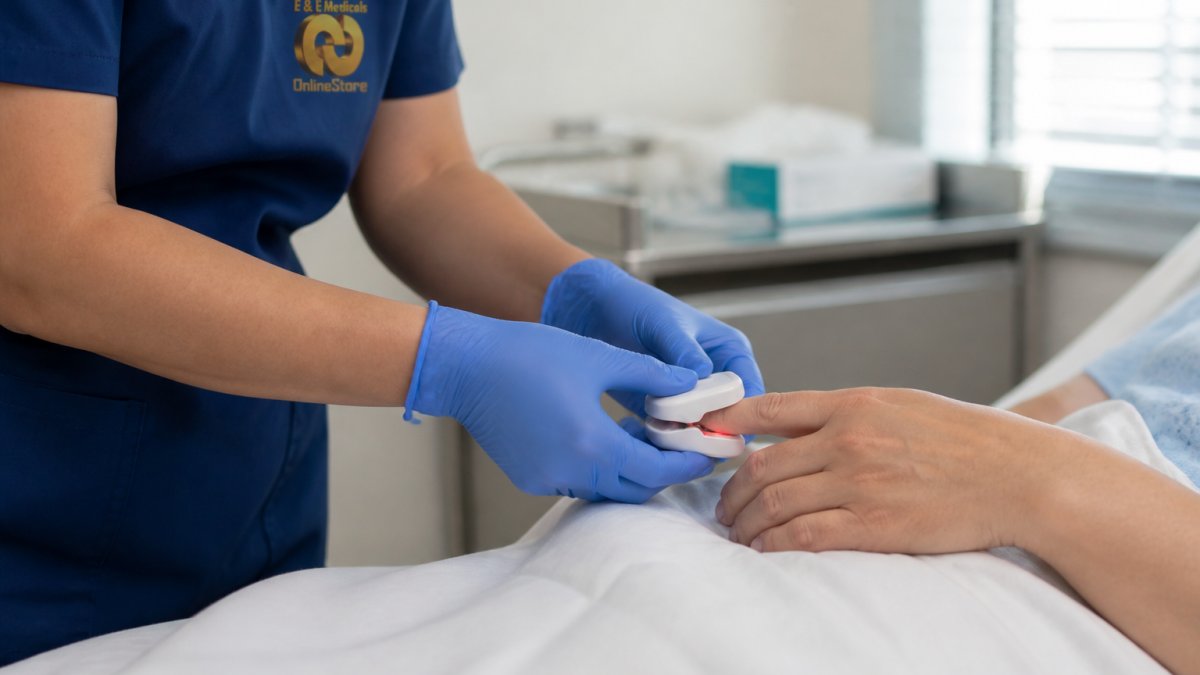
Clinical-grade devices use sophisticated sensor arrays and signal processing to filter out motion artifact and low perfusion states.
Patients in respiratory distress, with poor perfusion, or moving during measurement produce unreliable readings on consumer units. Clinical devices account for these variables through advanced algorithms, which is why hospitals and home health agencies specify clinical-grade equipment for chronic conditions.
FDA-Cleared Pulse Oximeter Requirements and Regulatory Standards
A clinical grade pulse oximeter must demonstrate accuracy against arterial blood gas measurements across a range of oxygen saturation levels and patient populations to receive FDA clearance.
Manufacturers submit clinical validation data across different skin tones, age groups, and physiological states. Only devices meeting FDA criteria receive 510(k) clearance for medical use.
Most consumer pulse oximeters skip FDA clearance, marketed as wellness devices without independent accuracy verification.
Accuracy in Diverse Patient Populations: Skin Tone Bias and Clinical Validation
Pulse oximetry has a well-documented bias rooted in sensor calibration. Melanin absorbs the red and infrared light that pulse oximeters use. When sensors are calibrated primarily on lighter skin tones, the algorithms become less accurate for patients with darker skin.
Pulse oximeters can overestimate SpO2 by 2-5% in patients with darker skin tones, meaning a true SpO2 of 88% might read as 93%, a clinically meaningful difference that could delay recognition of hypoxemia. Consumer devices rarely report accuracy separately by skin tone, making this bias invisible to users.
Devices cleared by the FDA after 2023 increasingly include diverse populations in trials and report accuracy stratified by skin tone.
In 2021, the FDA recommended that manufacturers include diverse populations in validation studies and report accuracy by skin tone. However, this guidance doesn't apply retroactively, so many consumer devices were never tested for bias.
Practical mitigation strategies exist for clinical settings:
- Use devices with recent clinical validation data stratified by skin tone. Request manufacturer documentation showing accuracy across diverse populations, not just aggregate performance.
- Pair pulse oximetry with clinical assessment. Never rely on a single SpO2 reading, especially in patients with darker skin. Look for signs of respiratory distress, work of breathing, and patient symptoms. A reading of 94% that conflicts with clinical signs of hypoxemia warrants arterial blood gas confirmation.
- Document skin tone in the medical record alongside SpO2 readings. This creates awareness of potential bias and supports clinical decision-making. Some electronic health records now include fields for this purpose.
- Consider alternative monitoring when pulse oximetry is unreliable. Transcutaneous CO2 monitoring or capnography can supplement pulse oximetry in high-stakes situations where accuracy is critical.
- Advocate for device selection based on validation data. When your facility procures pulse oximeters, request evidence of diverse population testing. This drives manufacturers toward more inclusive practices.
For home users, the stakes differ but the principle remains: understand your device's limitations. If you have darker skin and your readings seem inconsistent with how you feel, discuss this with your healthcare provider. Consumer devices may not have been validated on populations similar to you, and clinical correlation is essential.
The broader context: pulse oximetry bias is a patient safety issue that disproportionately affects Black, Indigenous, and other patients of color. Choosing clinical-grade devices with inclusive validation is one way to reduce health disparities in your practice. It's not just about accuracy, it's about equitable care.
Limitations of Home Pulse Oximeters and When Professional-Grade Matters
Consumer pulse oximeters have real constraints that manifest in everyday use.
Motion and Artifact Movement during measurement is the most common source of error in consumer devices.
Troubleshooting: Keep your hand still and supported on a flat surface for 10-15 seconds. Avoid talking or moving during measurement.
Poor Perfusion and Cold Hands Pulse oximeters depend on adequate blood flow to the fingertip.
Consumer devices often show no reading or wildly fluctuating numbers.
Troubleshooting: Warm your hands before measurement. Avoid caffeine and nicotine, which cause vasoconstriction.
Nail Polish, Artificial Nails, and Skin Conditions Red and dark nail polish absorb infrared light, creating false readings.
Troubleshooting: Remove nail polish before measurement. If you wear artificial nails, try your thumb.
A patient with true SpO2 of 85% might read as 88% on a consumer device, a difference that could delay recognition of significant hypoxemia.
Troubleshooting: If a reading is consistently below 92% SpO2, contact your healthcare provider. Do not rely on a single reading; take multiple measurements over time.
Data Reliability and Clinical Documentation Consumer devices store readings locally or via basic smartphone apps with minimal security oversight.
Clinical-grade devices integrate with hospital information systems, maintain encrypted audit trails, and comply with HIPAA standards.
Troubleshooting: If you're using a consumer device for home monitoring, keep a written log of readings with date, time, and any symptoms.
When Consumer Devices Fall Short Consumer pulse oximeters are appropriate for wellness tracking in healthy individuals, fitness monitoring, or periodic self-checks in stable patients. They are not appropriate for:
- Continuous monitoring of patients with respiratory disease (COPD, asthma, cystic fibrosis)
- Post-operative monitoring in the first 24-48 hours after surgery
- Monitoring of patients with acute illness or sepsis
- Patients with poor peripheral perfusion or cardiovascular instability
- Situations where readings will inform medication adjustments or hospital admission decisions
In these scenarios, clinical-grade devices reduce risk and provide the accuracy and documentation that patient safety demands.
Clinical-Grade Devices: Hospital Standards and Professional Use Cases
Clinical-grade pulse oximeters are built for continuous, high-stakes monitoring. Hospitals use them in operating rooms, intensive care units, and emergency departments where accuracy directly affects treatment decisions. These devices meet standards like ISO 80601-2-61, which specifies performance requirements for pulse oximeters.
These devices handle edge cases. Low perfusion states, motion, hypothermia, and other conditions that break consumer devices don't break clinical units. They're designed for the real world of patient care, not ideal conditions.
Choosing the Right Pulse Oximeter for Your Practice or Facility
Your choice depends on use case and regulatory environment. If you're a hospital or urgent care center, clinical-grade devices are mandatory. Liability, accreditation standards, and patient safety require it. E&E Medicals and Consulting Inc provides access to trusted clinical-grade equipment with fast delivery and secure procurement processes tailored to healthcare facilities.
For independent physician practices, the calculation shifts slightly. You need FDA-cleared devices that document readings reliably.
Long-term care facilities face similar pressures as hospitals. Residents often have chronic conditions requiring accurate monitoring. Clinical-grade devices reduce liability and improve care quality. The investment in proper equipment pays dividends in fewer adverse events and better outcomes.
Home health agencies sit at an intersection. Your staff makes clinical decisions in patients' homes based on pulse oximetry readings. Consumer devices introduce unnecessary risk. Clinical-grade alternatives provide the accuracy your nurses need to confidently assess patients.
For corporate workplace monitoring or fitness enthusiasts, consumer devices are appropriate. The stakes are lower, the use case is wellness-focused, and the price point makes sense. Just understand the limitations.
The core decision: Do you need readings you can defend clinically? Then clinical-grade is non-negotiable. Are you tracking wellness in low-risk scenarios? Consumer models suffice. Most healthcare settings fall into the first category.
When you're sourcing pulse oximeters for your practice or facility, accuracy and reliability aren't luxuries, they're foundational to patient safety. E&E Medicals and Consulting Inc specializes in connecting healthcare professionals with clinical-grade diagnostic equipment that meets your standards and your budget. Our fast delivery and secure payment processes make procurement seamless. Explore our selection of FDA-cleared pulse oximeters and other professional-grade medical supplies to support your clinical needs.
Frequently Asked Questions
What is the main difference between clinical-grade and consumer pulse oximeters?
Clinical-grade pulse oximeters meet stricter FDA clearance standards and undergo rigorous clinical validation across diverse patient populations, including those with low perfusion or darker skin tones. Consumer-grade models prioritize affordability and ease of use but may lack the accuracy and reliability required for medical diagnosis. Clinical devices use advanced signal extraction technology to filter artifact interference, while consumer models may struggle with movement or challenging conditions. Healthcare facilities require clinical-grade equipment because the consequences of inaccurate SpO2 readings directly affect patient safety and clinical decision-making.
Are consumer-grade pulse oximeters FDA-cleared for medical diagnosis?
Most consumer-grade pulse oximeters are not FDA-cleared for medical diagnostic purposes. Some consumer models may have FDA clearance for over-the-counter use, but this differs significantly from clinical-grade clearance. Clinical-grade devices undergo extensive testing to demonstrate accuracy across reference standards like arterial blood gas measurements, while consumer models are typically cleared only for general wellness monitoring. This distinction matters because diagnostic-grade devices must prove accuracy within defined mean difference and standard deviation limits across diverse populations, a requirement consumer models often do not meet.
How does skin tone affect pulse oximeter accuracy?
Pulse oximeters measure oxygen saturation by analyzing light absorption through tissue. Darker skin tones absorb more light, which can cause some devices to produce false readings or reduced signal quality. Clinical-grade pulse oximeters address this through photoplethysmography algorithms calibrated across diverse patient populations, while many consumer models were historically validated primarily on lighter skin tones. This bias is a significant gap in home monitoring devices and explains why clinical validation on diverse populations is essential for any device used in medical decision-making. Healthcare facilities must use equipment proven accurate across all patient demographics.
What standards must a pulse oximeter meet to be considered clinical-grade?
Clinical-grade pulse oximeters must meet FDA clearance standards, typically requiring validation against arterial blood gas as the reference standard. They must demonstrate accuracy within specified mean difference and standard deviation limits across diverse patient populations, including those with low perfusion, movement, and varying skin tones. Clinical devices also undergo point-of-care testing protocols and must show reliable data reliability in real-world conditions. Professional-grade equipment often includes advanced metrics like perfusion index and pleth variability index, features rarely found in consumer models. These rigorous standards ensure the device provides diagnostic utility for medical decision-making.