 ultimate-guide
Workplace First Aid Training: Best Practices Guide
Table of Contents
- Why Workplace First Aid Training Matters
- Assessing Workplace Hazards and Emergency Risks
- First Aid Training Requirements for Employers
- Selecting and Training First Aid Responders
- First Aid Training for Employees: Program Design and Delivery
- First Aid Training Program Checklist and Implementation
- Workplace First Aid Kit Supplies and Emergency Equipment
- Measuring Program Effectiveness and Continuous Improvement
- Frequently Asked Questions
Last Updated: October 16, 2026
Why Workplace First Aid Training Matters
A workplace emergency can escalate in seconds. When someone collapses, suffers a severe cut, or stops breathing, the first few minutes determine outcomes. That's where workplace first aid training becomes non-negotiable, creating a culture of preparedness that protects employees and reduces liability exposure.
Workplace first aid training equips your team to respond confidently when medical emergencies occur. Without trained responders on-site, you're dependent on emergency services arrival times, which can stretch to 10 minutes or longer in some areas. Employees trained in CPR and first aid can stabilize a person, control bleeding, or maintain an airway until professional help arrives.
Beyond the life-saving value, workplace first aid training demonstrates organizational commitment to employee safety. At E&E Medicals and Consulting Inc, we understand that this commitment starts with proper training infrastructure and continues through maintained supplies and regular refresher courses.
Assessing Workplace Hazards and Emergency Risks
Before designing your first aid training program, understand what emergencies are possible in your specific workplace. A manufacturing facility faces different risks than an office building, and a construction site presents hazards a retail store doesn't.
Start by documenting physical hazards: confined spaces, heights, electrical equipment, machinery, chemical exposure, extreme temperatures, or heavy lifting. Each creates specific injury risks.
Next, examine your workforce composition. Are employees in teams or scattered across locations? Are there seasonal variations in hazard exposure? A construction company operating year-round in northern climates faces different emergency patterns than one working only in summer.
Consider your proximity to professional medical services. Rural locations may be 30+ minutes from a hospital, while urban centers have faster response times. This geography influences how much training depth you need and which procedures your first aid team must master.
First Aid Training Requirements for Employers
Employer obligations for first aid training are not uniform. In the United States, no single federal mandate applies to every workplace. Requirements emerge from federal OSHA standards, state OSHA plans, industry-specific regulations, and case law on employer liability.
Start with the federal baseline.
State plans are where requirements diverge. Some states adopt federal standards verbatim; others add stricter provisions, such as mandating a specific number of trained responders based on workforce size or requiring someone trained in first aid during all shifts.
A practical compliance workflow looks like this:
- Identify your jurisdiction and industry classification. Multi-site operations may need to comply with several state plans simultaneously.
- Pull the current first aid and medical services standard for each jurisdiction. Look for language on responder ratios, certification types, supply requirements, and recordkeeping.
- Map those requirements against your hazard assessment. If your workplace has higher-risk hazards, you may need more responders or more advanced training than the minimum.
- Document your rationale. If you exceed the minimum, note why. If you meet only the minimum, show how you determined that was sufficient.
- Set a review cadence. Regulations and interpretations change; an annual check keeps your program current.
Beyond regulatory compliance, consider legal exposure. If an emergency occurs and trained responders are not available, your organization may face liability claims, while a documented first aid training program demonstrates due diligence.
A common pattern is treating compliance as a one-time checkbox. A stronger approach treats it as a living requirement: verify, document, train, and review.
Selecting and Training First Aid Responders
Choosing the right people as first aid responders matters more than the number you select. You need individuals who stay calm under pressure, communicate clearly, and take responsibility seriously. These aren't necessarily your most senior employees; sometimes newer staff with strong interpersonal skills make better responders.
Identify candidates who demonstrate reliability, composure under stress, good communication, and willingness to help. Ask for volunteers first, since people who self-select tend to take the role more seriously.
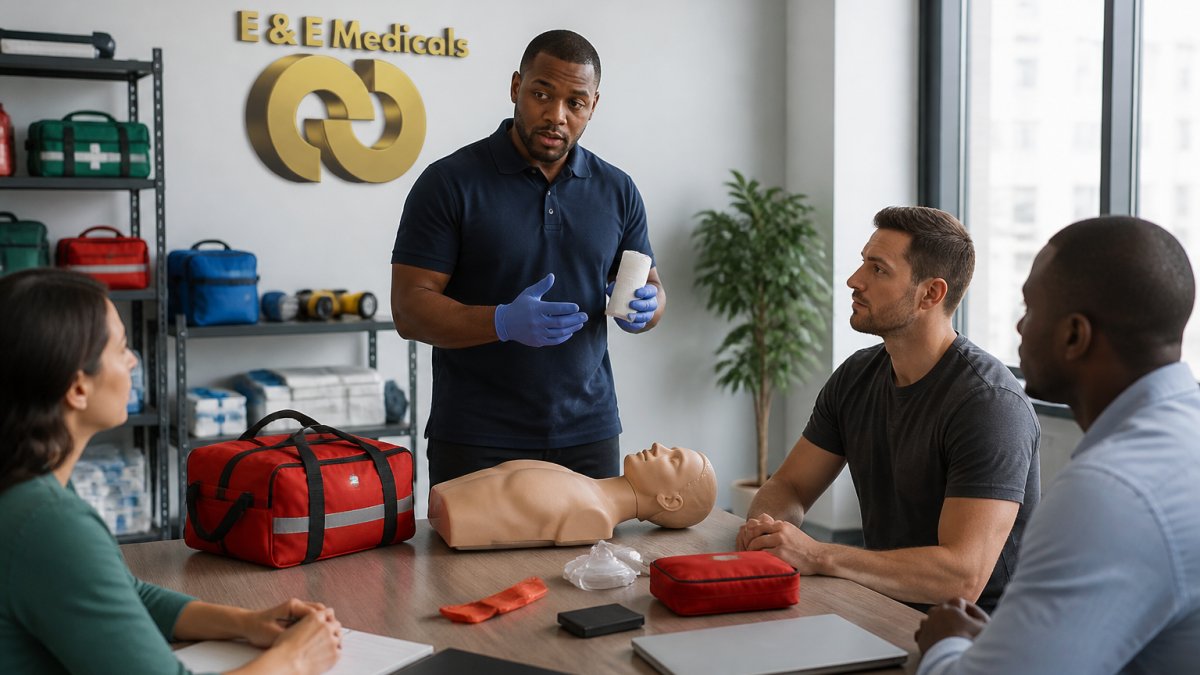
Once you've identified your responders, enroll them in certification courses. CPR and first aid certification typically requires 6-8 hours of in-person training, followed by written and practical exams. Certifications are valid for 2-3 years, and many organizations recertify annually to maintain skill sharpness.
First Aid Training for Employees: Program Design and Delivery
Your broader employee training program differs from responder certification. While your designated first aid team needs comprehensive CPR and advanced training, your general workforce benefits from basic awareness: where supplies are located, how to call for help, and basic response principles.
Design your program in tiers. Tier 1 is awareness training for all employees: recognizing medical emergencies, calling 911, basic safety principles. Tier 2 is basic first aid for interested employees who want to learn wound care, choking response, and recovery positions.
Delivery methods matter. Online modules work for awareness training but don't substitute for hands-on practice; CPR and advanced first aid require in-person training with mannequins and supervised practice.
Schedule training during work hours and make it mandatory for your first aid team; optional training rarely achieves high participation. For broad awareness, integrate it into onboarding and annual safety training.
First Aid Training Program Checklist and Implementation
Building a functional first aid training program requires coordinated action across multiple areas. Use this implementation framework to ensure nothing falls through the cracks.
| Implementation Element | Responsibility | Timeline | Status |
|---|---|---|---|
| Hazard assessment | Safety manager | Month 1 | [ ] |
| Responder selection | HR + department leads | Month 1 | [ ] |
| Training provider selection | Procurement | Month 1-2 | [ ] |
| Initial responder certification | Training provider | Month 2-3 | [ ] |
| First aid kit procurement | Facilities | Month 2 | [ ] |
| Employee awareness training | HR | Month 3 | [ ] |
| Emergency procedures documentation | Safety manager | Month 3 | [ ] |
| Quarterly refresher scheduling | HR | Ongoing | [ ] |
| Annual recertification tracking | HR | Ongoing | [ ] |
Start with your hazard assessment and responder selection, which determine training scope. Then select a training provider offering in-person certification courses that fit your schedule; many provide on-site group training, reducing logistical burden.
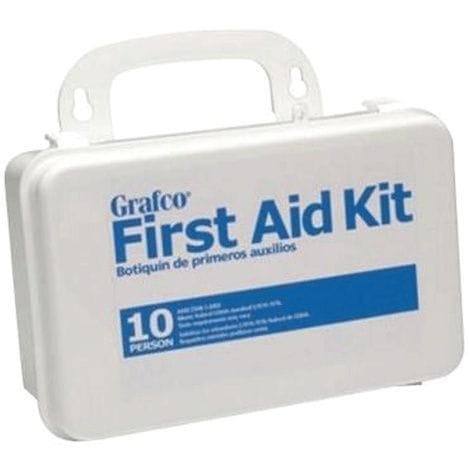
Procure first aid supplies simultaneously. Your designated responders need access to well-stocked kits before they're certified, they need to know what's available during practice scenarios. E&E Medicals and Consulting Inc offers several first aid kit options suited to different workplace sizes.
ACME United Bulk ANSI First Aid Kit →
Document your emergency procedures clearly. Create a one-page reference guide showing where first aid kits are located, who the trained responders are, how to contact emergency services, and basic response steps. Post it in visible locations and include it in employee handbooks.
Workplace First Aid Kit Supplies and Emergency Equipment
Your first aid kit is only useful if stocked with supplies your responders actually need. Generic kits sometimes include items you'll never use while missing critical ones. Match kit contents to your workplace hazards.
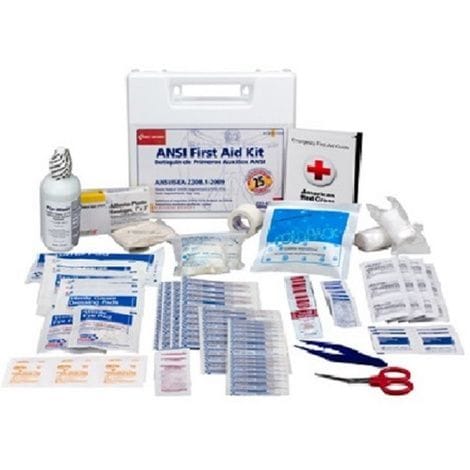
Basic kits should include: adhesive bandages, gauze pads, medical tape, antiseptic wipes, antibiotic ointment, elastic bandages, triangular bandages, tweezers, scissors, pain relievers, and antihistamine. For workplaces with higher injury risks, add: elastic wrap, instant cold packs, CPR barrier devices, and eye wash.
E&E Medicals and Consulting Inc provides several stocked kits that meet OSHA and ANSI standards. The ACME United Bulk ANSI First Aid Kit ($44.75) is designed for small offices and vehicles, featuring a water-resistant plastic case and wall-mounting capability.
Keep kits accessible but organized. Wall-mounted kits are visible and easy to locate during emergencies. Label them clearly, conduct quarterly inventory checks, and restock immediately after any use.
Measuring Program Effectiveness and Continuous Improvement
A first aid training program that sits dormant loses value.
Start with coverage metrics.
Certification completion and currency are next.
Drill performance is a stronger test than classroom completion.
Response time is useful but needs context: in a large facility, two minutes may be excellent; in a small office, it may indicate confusion about roles.
Corrective-action closure separates a functional program from a paper one.
Post-incident reviews should follow a consistent structure. After any emergency or drill, gather responders and ask: What happened? What was supposed to happen? What went well? What could improve?
Use those findings to update training content, adjust equipment placement, revise procedures, or add responders.
Schedule an annual program review. Assess whether your responder count is adequate, whether training content remains relevant given workplace changes, and whether your metrics are trending in the right direction.
Continuous improvement doesn't require major overhauls.
Frequently Asked Questions
How often should workplace first aid training be refreshed?
Most workplace first aid training certifications require renewal every 2 years. However, refresher courses every 12 months help maintain skill retention and employee confidence in emergency response. The frequency depends on your workplace hazard assessment, higher-risk environments may benefit from more frequent training. Check your local workplace safety regulations, as requirements vary by jurisdiction and industry.
What should be included in first aid training for employees?
Effective first aid training for employees covers CPR techniques, wound care and bleeding control, breathing emergencies, shock management, and response to physical injuries. Training should also include your specific workplace emergency procedures, the location of first aid supplies and equipment, how to contact emergency services, and how to recognize when professional medical help is needed. Tailor content to match the hazards identified in your workplace risk assessment.
How many employees should be trained in first aid at my workplace?
A practical approach is to train at least one first aid responder per shift, plus additional coverage for absences. For a small office of 10-25 people, 2-3 trained responders is typical. Larger facilities may need 5-10 or more, depending on site size, hazard level, and shift patterns. Consider training supervisors and managers as a priority, and ensure coverage across all work areas. Your hazard assessment and emergency response plan should guide the exact number.
What should be in my workplace first aid kit?
A workplace first aid kit should include bandages, gauze pads, adhesive tape, antiseptic wipes, antibiotic ointment, and pain relief supplies. For higher-risk environments, add eye wash, elastic bandages for sprains, triangular bandages, and CPR face shields. Kits meeting OSHA and ANSI standards, such as the Graham-Field Stocked First Aid Kit for 25 Persons ($63.69) or Medline General First Aid Kit ($92.29), provide comprehensive coverage. Stock kits should be easily accessible, regularly inspected, and refilled promptly after use.
How can employers evaluate a workplace first aid training program?
Track key metrics: employee participation rates, certification completion and renewal rates, incident response times, and outcomes of first aid interventions. Conduct post-incident reviews to assess responder performance and identify training gaps. Gather feedback from trained employees on course relevance and clarity. Monitor whether emergency procedures are followed correctly during drills or actual incidents. Annual evaluation ensures your program stays current with workplace changes, regulatory updates, and emerging hazards.
What are the main first aid training requirements for employers?
Employer requirements vary by jurisdiction and industry. Many regions require employers to provide first aid training to designated responders, maintain accessible first aid supplies, have emergency response procedures documented, and ensure training is current. Some industries with higher hazard levels face stricter compliance obligations. Review OSHA requirements if you operate in the United States, and consult your local workplace safety authority for specific mandates. Documentation of training completion and certification status is typically required for compliance.
What is a first aid training program checklist for workplace implementation?
A comprehensive first aid training program checklist should include: hazard assessment completed, responder roles assigned, training provider selected, certification obtained, emergency procedures documented, first aid kits stocked and accessible, emergency contact information posted, regular drills scheduled, training refresher dates tracked, post-incident review process established, and accessibility accommodations confirmed. Ensure all documentation is current and available for inspection. Review the checklist annually and update it when workplace conditions, staffing, or regulations change.