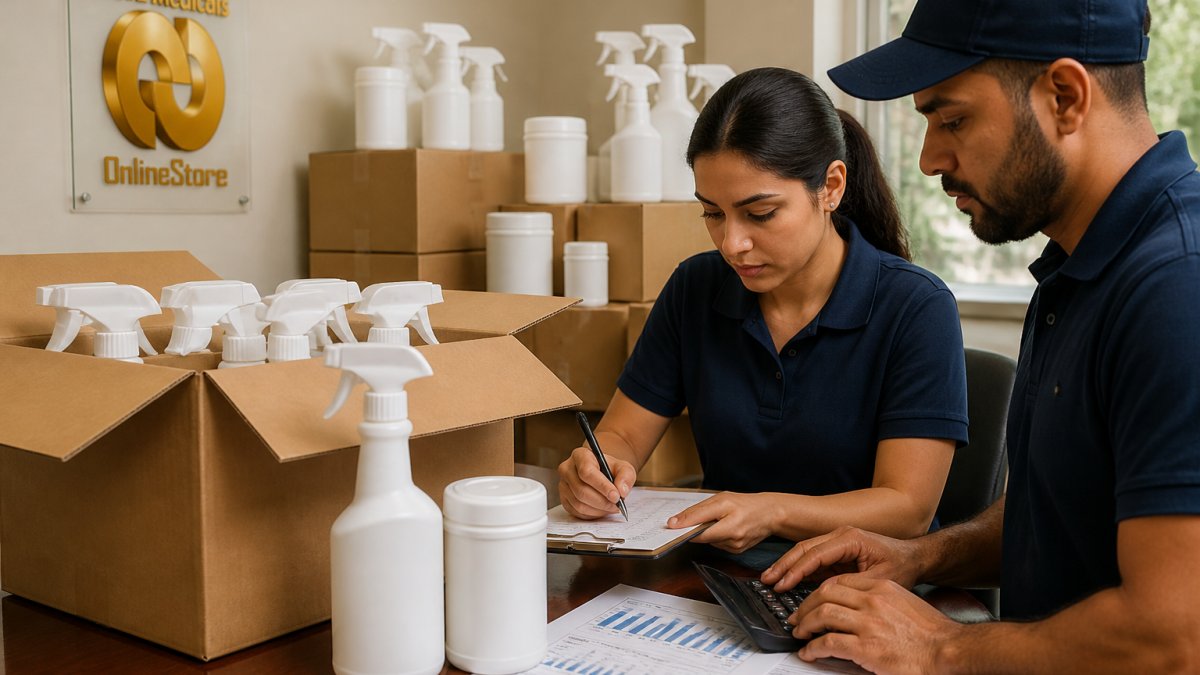
 comparison
Hospital-Grade Surface Cleaner Bulk Purchase Cost
Table of Contents
- Understanding Hospital-Grade Surface Cleaner Bulk Purchase Cost
- Ready-to-Use vs Concentrate Disinfectant Cost: Which Saves More at Scale
- EPA-Registered and Hospital-Grade Standards: What Affects Pricing
- Bulk Procurement Strategies for Healthcare Clinics and Facilities
- Total Cost of Ownership: Beyond the Per-Unit Price
- Storage, Shelf-Life, and Regulatory Compliance Considerations
- Choosing the Right Supplier for Your Facility's Disinfection Needs
- Frequently Asked Questions
Last Updated: September 30, 2026
Understanding Hospital-Grade Surface Cleaner Bulk Purchase Cost
Understanding what drives these costs, and how to negotiate them, gives you use in procurement conversations. This guide breaks down the variables that determine what you'll actually pay for hospital-grade disinfection at scale.
Ready-to-Use vs Concentrate Disinfectant Cost: Which Saves More at Scale
Ready-to-use formulas cost more per unit but eliminate mixing labor and equipment requirements. Concentrated formulas demand upfront investment in dilution equipment and staff training, but their cost-per-application drops significantly as volume increases.
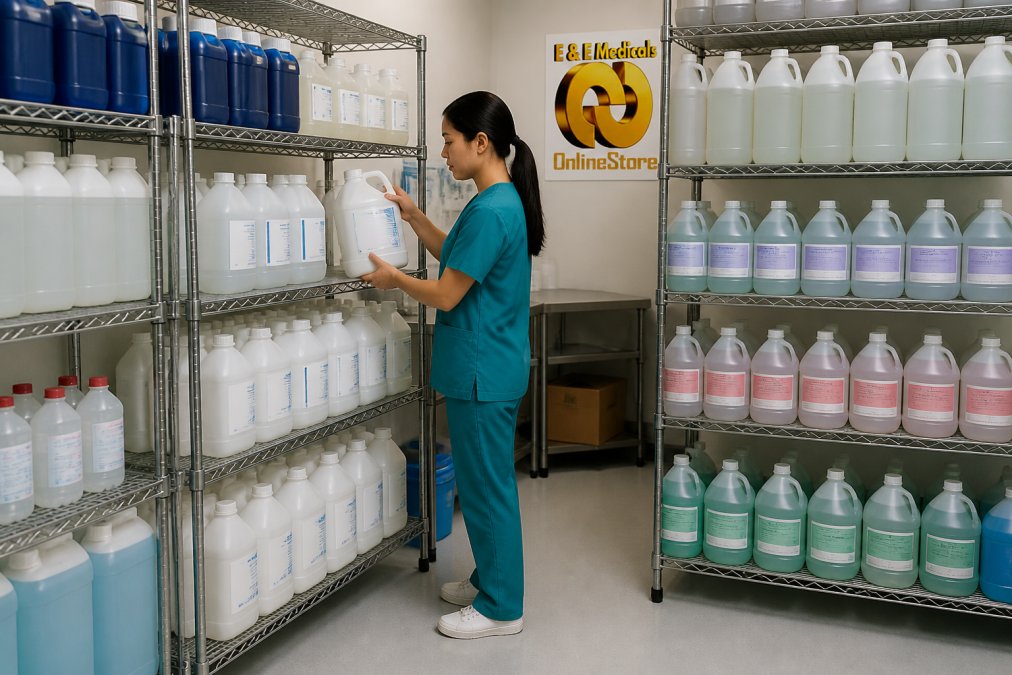
Ready-to-Use Advantages:
- No dilution equipment or training needed
- Consistent strength every application
- Faster staff deployment
- Lower contamination risk from improper mixing
- Easier inventory tracking
Concentrated Formula Advantages:
- Lower per-application cost at high volumes
- Reduced packaging waste and storage footprint
- Flexible dilution ratios for different surfaces
- Better cost control as volume scales
- Longer shelf life per unit purchased
EPA-Registered and Hospital-Grade Standards: What Affects Pricing
Regulatory Compliance Verification Checklist for Bulk Purchases:
- EPA Registration Number: Every hospital-grade disinfectant sold in the U.S. must display an EPA Reg. No. on the label (format: EPA Reg. No. XXXXX-XX). Cross-check this number on the EPA's official product registry at epa.gov/pesticides to confirm active status and approved claims.
- List N Status: Confirm the product appears on EPA List N (Disinfectants for Use Against SARS-CoV-2). This list is updated regularly; a product on List N today may be delisted if efficacy data is challenged. Request the supplier's most recent List N documentation dated within the last 90 days.
- Contact Time and Dilution Ratio: The EPA registration specifies exact contact times (e.g., 10 minutes at full strength, 5 minutes at 1:10 dilution) and surface types. Verify these match your facility's workflow. A product requiring 15-minute contact time may not fit high-turnover clinical areas.
- Pathogen Coverage: EPA registrations list specific pathogens covered. Hospital-grade products typically cover tuberculosis (TB), enveloped viruses (including influenza and coronaviruses), and both gram-positive and gram-negative bacteria. Verify the product covers pathogens relevant to your facility's infection control protocols.
- Safety Data Sheet (SDS) Currency: Request an SDS dated within the last 2 years. SDS documents change when formulations are updated or new hazard data emerges. An outdated SDS may not reflect current handling requirements or incompatibilities with other chemicals your staff uses.
- State-Level Registrations: Some states (California, New York) have additional registration requirements beyond EPA approval. Confirm the product is registered in your state if you operate multi-state facilities.
Surface material compatibility also affects pricing. Products safe for hard, non-porous surfaces (stainless steel, plastic, glass) cost less to formulate than those certified for soft surfaces, electronics, or specialty materials. Your bulk purchase cost depends partly on how broad your facility's surface needs are. Request compatibility documentation for all surface types in your facility, patient beds, medical equipment, flooring, textiles, before finalizing bulk orders. A product approved for stainless steel but not for electronic touchscreens creates workflow friction and forces you to maintain multiple disinfectants, eroding cost savings.
Bulk Procurement Strategies for Healthcare Clinics and Facilities
Effective bulk procurement means understanding your actual consumption patterns before negotiating contracts. Most facilities purchase based on historical patterns without analyzing what they actually use month-to-month.
Key procurement variables:
- Minimum order quantities: Understand thresholds that trigger price breaks
- Contract length: Annual contracts typically offer 10-15% better pricing than quarterly agreements
- Payment terms: Early payment (net 15 vs. net 30) sometimes yields 2-3% discounts
- Delivery frequency: Consolidated monthly deliveries cost less per unit than weekly orders
- Storage capacity: Buying larger quantities requires adequate shelf space and inventory management
Total Cost of Ownership: Beyond the Per-Unit Price
Per-unit pricing tells only half the story. Total cost of ownership (TCO) includes storage, handling, staff time for mixing and application, equipment maintenance, and waste disposal. A concentrated disinfectant might cost less per ounce, but if you're buying equipment to dilute it, training staff on proper ratios, and managing inventory across multiple storage locations, the true cost rises. A ready-to-use formula eliminates those overhead costs, making it genuinely cheaper for small operations despite higher unit cost.
TCO Calculation Framework:
Calculate TCO by adding these five cost categories:
-
Product Cost (per application)
- For ready-to-use: List price ÷ number of applications per bottle
- For concentrate: (List price ÷ dilution ratio) ÷ number of applications per diluted gallon
- Example: A 1-gallon concentrate at $45, diluted 1:10, yields 11 gallons of working solution. If each gallon covers 500 sq. ft., that's 5,500 sq. ft. per $45 bottle, or $0.0082 per sq. ft. A ready-to-use 32 oz. bottle at $12 covers 1,000 sq. ft., or $0.012 per sq. ft. The concentrate is 32% cheaper per application.
-
Equipment and Supplies
- Dilution systems (spray bottles, proportioning pumps, automated dispensers): $200-$2,000 per location
- Applicators (trigger sprayers, microfiber cloths, mop heads): $5-$50 per unit
- Personal protective equipment (gloves, eye protection, respirators if applicable): $2-$15 per staff member
- For ready-to-use: minimal equipment cost (spray bottles only, $1-$5 each)
- For concentrate: amortize equipment cost over 3-5 years of use
-
Labor (mixing time, application time, inventory management)
- Mixing concentrate: 2-5 minutes per batch at $15-$25/hour labor cost = $0.50-$2.00 per batch
- Application time: typically identical for concentrate and ready-to-use (5-10 minutes per 1,000 sq. ft.)
- Inventory management: tracking expiration dates, rotating stock, auditing usage = 2-4 hours/month at $15-$25/hour = $30-$100/month
- Ready-to-use reduces mixing time to zero but increases inventory tracking (more SKUs to manage)
-
Storage and Facility Costs
- Square footage: Concentrate requires less space (1 gallon vs. 32 oz. ready-to-use bottles). A 100-case annual order of concentrate occupies ~15 sq. ft.; equivalent ready-to-use occupies ~40 sq. ft.
- Climate control: Disinfectants degrade in heat/humidity. Climate-controlled storage costs $5-$15/sq. ft./year
- Secondary containment: Bulk chemical storage may require spill containment systems ($500-$2,000 one-time)
- Shelving and organization: $200-$1,000 per storage area
-
Waste Disposal and Compliance
- Expired product disposal: $0.50-$2.00 per gallon (hazardous waste fees)
- Packaging waste: Concentrate generates less packaging waste; ready-to-use generates more plastic bottles
- Compliance documentation: tracking, audits, reporting = 1-2 hours/month at $20-$30/hour = $20-$60/month
TCO Comparison Example: 100-Bed Hospital
Scenario A: Ready-to-Use (32 oz. bottles at $12 each, 1,000 sq. ft. per bottle)
- Product cost: 25,000 applications ÷ 26 applications/bottle = 962 bottles/year × $12 = $11,544
- Equipment: 10 spray bottles × $3 = $30
- Labor (mixing): $0
- Labor (inventory): 3 hours/month × $20 = $720/year
- Storage: 962 bottles occupy ~50 sq. ft. × $10/sq. ft. = $500/year
- Waste disposal: Minimal (bottles recycled)
- Total Year 1 TCO: $12,794
- Cost per application: $0.51
Scenario B: Concentrated (1-gallon bottles at $45 each, 1:10 dilution, 5,500 sq. ft. per bottle)
- Product cost: 25,000 applications ÷ 143 applications/bottle = 175 bottles/year × $45 = $7,875
- Equipment: 2 proportioning pump systems × $800 + 5 spray bottles × $3 = $1,615 (amortized over 5 years = $323/year)
- Labor (mixing): 175 batches/year × 3 minutes × $20/hour = $175
- Labor (inventory): 2 hours/month × $20 = $480/year
- Storage: 175 bottles occupy ~15 sq. ft. × $10/sq. ft. = $150/year
- Waste disposal: 10 expired bottles/year × $1.50 = $15/year
- Total Year 1 TCO: $10,018
- Cost per application: $0.40
Decision Tree: Which Format Minimizes Your TCO?
Choose ready-to-use if:
- Facility size: <30 beds or <10,000 sq. ft. of disinfected surfaces
- Annual applications: <5,000
- Staff turnover is high (training cost for concentrate dilution is wasted)
- Storage space is limited
- Infection control protocols require multiple product types (mixing complexity increases)
Choose concentrate if:
- Facility size: >50 beds or >20,000 sq. ft. of disinfected surfaces
- Annual applications: >10,000
- Staff is stable and can be trained on dilution procedures
- Adequate climate-controlled storage exists
- You can standardize on 1-2 concentrate products across departments
Storage, Shelf-Life, and Regulatory Compliance Considerations
Hospital-grade disinfectants have finite shelf lives, typically 2-3 years from manufacture for unopened containers. Opened bottles degrade faster, usually within 30-90 days depending on the formulation and storage conditions.
Regulatory compliance adds complexity:
- Safety Data Sheets (SDS) must be accessible to staff
- Inventory tracking for controlled substances (some formulations contain regulated components)
- Documentation of product use for infection control audits
- Proper labeling and secondary containment for bulk containers
- Staff training on handling and dilution procedures
Choosing the Right Supplier for Your Facility's Disinfection Needs
Supplier selection extends beyond pricing. Reliability, product consistency, technical support, and integration with your ordering systems matter as much as cost.
Frequently Asked Questions
Where can I buy hospital-grade disinfectant cleaner in bulk?
Hospital-grade surface cleaners are available through specialized medical supply distributors, e-commerce platforms serving healthcare facilities, and direct manufacturers. E&E Medicals provides access to professional-grade disinfectants with bulk ordering options, fast delivery, and secure payment processes. When sourcing bulk quantities, verify that suppliers offer EPA-registered products and can handle your facility's volume requirements. Check the supplier's certification status and track record for on-time delivery before committing to large orders.
How does ready-to-use vs concentrate disinfectant cost compare for bulk purchases?
Concentrated formulas typically offer lower per-unit costs when purchased in bulk, as you pay for active ingredients rather than water and packaging. Ready-to-use products cost more upfront but eliminate dilution steps, training requirements, and equipment needs. For large facilities processing high volumes, concentrated solutions often deliver better total cost of ownership despite higher initial investment in dilution equipment. The break-even point depends on your facility's usage rate, storage capacity, and labor costs for preparation.
What makes a disinfectant hospital-grade, and does that affect bulk pricing?
Hospital-grade disinfectants meet EPA List N requirements, demonstrate efficacy against a broad spectrum of pathogens including tuberculosis and viruses, and are formulated for hard, non-porous surfaces in clinical settings. Products meeting these standards typically cost more than standard cleaners because they undergo rigorous testing and maintain consistent antimicrobial activity. Bulk purchasing of EPA-registered products can reduce per-unit costs, but pricing remains higher than consumer-grade alternatives due to regulatory compliance and proven efficacy standards.
What storage and compliance requirements apply to bulk hospital-grade cleaner purchases?
Bulk quantities require proper storage in cool, dry environments away from direct sunlight to maintain shelf-life and efficacy. You must maintain Safety Data Sheets (SDS) for all products and ensure staff access to them for regulatory compliance. Storage areas should be clearly labeled, organized by product type, and monitored for inventory rotation. Check local infection control guidelines and your facility's procurement policies for specific storage temperature, humidity, and security requirements. Proper storage management directly impacts the total cost of ownership by preventing product degradation and waste.
Choosing the right hospital-grade surface cleaner at bulk scale requires balancing cost against reliability, compliance, and operational fit. E&E Medicals and Consulting Inc helps healthcare facilities navigate these decisions by offering cost-effective procurement solutions with fast delivery and secure payment processes. Get started with E&E Medicals and Consulting Inc to streamline your bulk disinfectant ordering and reduce procurement overhead.