 Listicle
Bulk Wound Care Supplies for Facilities
Table of Contents
- What Bulk Wound Care Supplies Should Your Facility Stock
- Essential Wound Dressings in Bulk for Different Care Needs
- Sterile Wound Care Supplies vs. Non-Sterile Options
- Building Your Wound Care Supply Checklist
- Wound Care Inventory Management for Facilities
- Pricing, Bulk Ordering, and Total Cost of Ownership
- Compliance, Quality Standards, and Supplier Reliability
- Frequently Asked Questions
Last Updated: October 18, 2026
What Bulk Wound Care Supplies Should Your Facility Stock
Facilities face a constant challenge: maintaining adequate inventory without overstocking products that expire or go unused.
Stocking the right assortment starts with understanding what your facility actually uses. Most facilities default to broad purchases, then overspend on items gathering dust while running short on essentials.
The supplies you stock fall into predictable categories: primary dressings, secondary dressings, antiseptics and cleansers, closure strips and tapes, and protective equipment like gloves.
Essential Wound Dressings in Bulk for Different Care Needs
Wound dressings are the foundation of any facility's bulk wound care supplies inventory. The dressing you choose determines how quickly a wound heals, how often you change it, and whether complications like infection or maceration develop.
Gauze and Woven Dressings
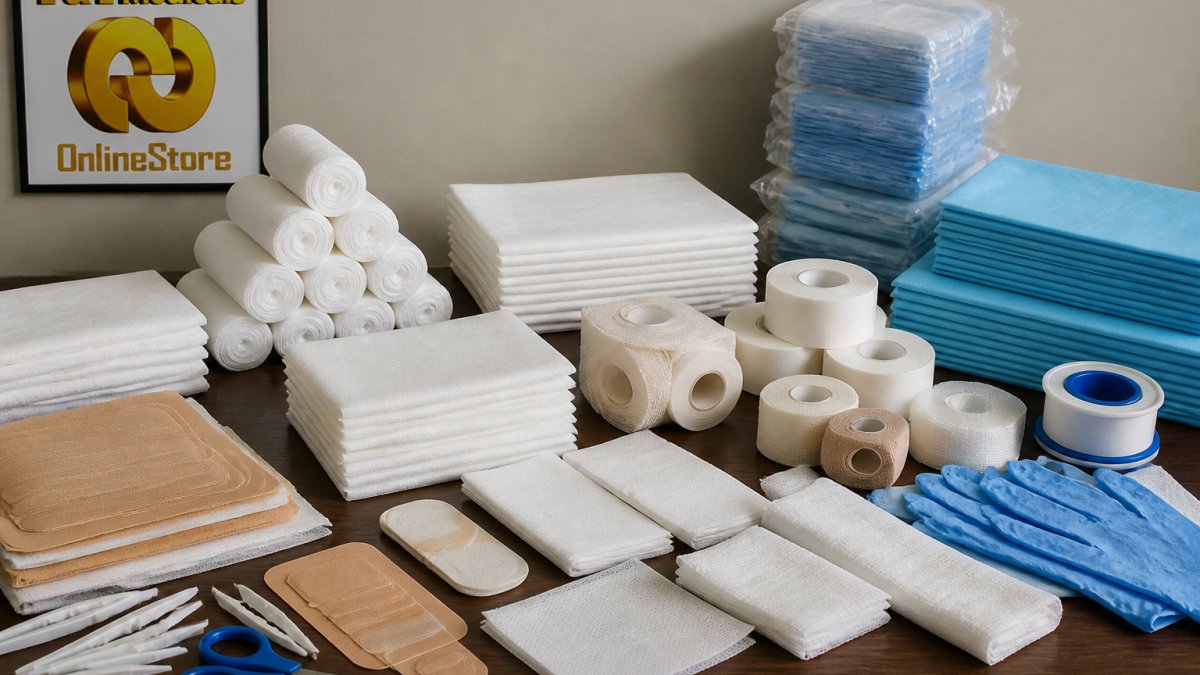
Woven gauze remains the workhorse of wound care: absorbent, affordable, and suitable from minor cuts to post-surgical sites.
The Covidien Kerlix Gauze Sponges at $12.79 offer prewashed, fluff-dried woven gauze with a crinkle-weave pattern that cushions and protects wounds.
Non-sterile alternatives like the Covidien Curity Non-Woven All Purpose Non-Sterile Sponges at $4.45 work well for wound prep, ointment application, and cleaning.
Conforming Bandages for Secondary Support
Secondary dressings secure primary dressings, provide mild compression, and protect wounds from contamination.
The Medline Bulkee Lite Sterile Conforming Bandages at $15.69 use 100% ultra-soft crimped cotton with 3-ply construction.
When budget is the primary concern, the Medline Bulkee Lite Non-Sterile Conforming Bandages at $17.19 deliver the same core functionality without sterility, ideal for secondary dressing applications.
| Dressing Type | Product | Sterility | Price | Best For |
|---|---|---|---|---|
| Woven Gauze | Covidien Kerlix | Sterile | $12.79 | Primary dressing, wound packing |
| Cotton Gauze Roll | McKesson Sterile Fluff | Sterile | $1.99 | Cost-effective sterile coverage |
| Non-Woven Sponges | Covidien Curity | Non-Sterile | $4.45 | Wound prep, ointment application |
| Conforming Bandage | Medline Bulkee Lite Sterile | Sterile | $15.69 | Secondary dressing, patient comfort |
| Conforming Bandage | Medline Bulkee Lite Non-Sterile | Non-Sterile | $17.19 | Secondary dressing, budget-conscious |
Sterile Wound Care Supplies vs. Non-Sterile Options
The choice between sterile and non-sterile supplies determines both infection risk and procurement cost.
Sterile supplies are mandatory for open wounds, surgical sites, and any application where contamination could cause infection.
Non-sterile supplies work for wound prep, cleaning, ointment application, and secondary support in low-risk scenarios.
For small offices and work sites, the ACME United Bulk ANSI First Aid Kit at $44.75 meets OSHA and ANSI standards with a water-resistant, wall-mountable or portable plastic case.
Building Your Wound Care Supply Checklist

A facility-specific supply checklist prevents both stockouts and overstock. The most common failure is ordering from a generic catalog rather than from the tasks your staff actually perform. Build it bottom up: list every wound care task your teams handle in a typical week, then map each task to the specific product, size, and sterility level your staff reaches for.
Start With a Task Inventory, Not a Product List
Walk through a normal shift and write down each wound care touchpoint: routine dressing changes, post-surgical site checks, IV and catheter site prep, minor laceration care, skin tear management, incontinence-associated dermatitis care, wound packing, and debridement support. For each task, record the product used most, the size or configuration, and whether sterility is required. This task-to-product map becomes the backbone of your bulk order and eliminates dead stock.
Checklist by Facility Type and Care Setting
Different care settings have different wound care profiles. Use these starting points to shape your first draft checklist, then adjust against your own usage data.
- Skilled nursing and long-term care: high volume of routine dressing changes, skin tear management, incontinence care, and pressure injury prevention. Prioritize non-sterile gauze for cleaning and prep, sterile gauze and conforming bandages for dressing changes, skin cleansers and barrier products, transparent tapes, and vinyl gloves for routine tasks. Keep nitrile gloves on hand for any bloodborne-pathogen exposure.
- Outpatient clinics and physician offices: lower volume but broader variety, minor laceration repair, biopsy site care, IV site prep, and post-procedure dressing changes. Stock sterile gauze in multiple sizes, closure strips, surgical tape, antiseptic cleansers, and a small nitrile glove inventory. Avoid over-ordering high-cost specialty dressings that may expire before use.
- Surgical and procedural settings: sterile field requirements dominate. Sterile gauze, sterile conforming bandages, sterile packing materials, and sterile gloves are non-negotiable. Non-sterile products belong only in prep and cleanup roles, clearly separated from sterile field supplies.
Primary Dressings and Packing Materials
Primary dressings contact the wound directly and must match the wound type and care stage. Gauze sponges like Covidien Kerlix work for wounds requiring frequent changes and high absorbency; conforming bandages provide secondary support.
Your checklist should specify quantities based on patient volume and average wound complexity. A 50-bed facility might stock 500 sterile gauze sponges monthly; a 200-bed facility might need 2,000.
Antiseptics, Tapes, and Wound Closure Strips
Wound cleansing is the first step in infection prevention. The 3M Cavilon No-Rinse Skin Cleanser at $17.19 removes contaminants without irritation and includes moisturizing ingredients, valuable for incontinence care or frequent cleansing.
For securing dressings and catheters, the ReliaMed Hypoallergenic Clear Surgical Tape at $5.25 offers transparent, water-resistant adhesion without latex concerns. Clear tape lets staff monitor the wound site without removing the dressing, reducing disruption and infection risk.
Protective Gloves and Skin Cleansers
Gloves are non-negotiable for infection control. The Ambitex Powder Free Clear Disposable Vinyl Gloves at $22.65 offer latex-free protection with better dexterity than polyethylene, appropriate for tasks requiring minimal chemical exposure.
ACME United Bulk ANSI First Aid Kit →
The price difference reflects the protection level. Vinyl gloves suit routine wound prep and dressing changes; nitrile gloves are essential for infectious materials or chemotherapy-contaminated dressings.
A Simple Checklist Template
For each product, capture five fields: product name and size, sterility level, task it supports, average monthly usage, and par level. That structure drives ordering decisions and spots items drifting toward expiration. Facilities that maintain it typically find a small number of SKUs account for most of their spend, making bulk pricing negotiations far more effective.
Wound Care Inventory Management for Facilities
Effective inventory management balances availability, cost, and storage constraints. Most facilities struggle with one of three problems: running out of critical supplies mid-shift, expired products taking up shelf space, or premium prices for emergency restocking. The fix is a small set of disciplines applied consistently, usage tracking, par levels, reorder points, and rotation.
Estimate Usage Before You Set Any Number
Par levels and reorder points are only as good as the usage data behind them. Track actual consumption weekly for at least two months before setting targets, recording units used per product, not cases ordered, ordering data hides waste and shrinkage. A handful of high-use items (sterile gauze, conforming bandages, tape, gloves) account for most volume while specialty dressings move slowly.
Set Par Levels and Reorder Points
A par level is the minimum quantity needed on hand to cover normal operations plus a buffer for demand spikes. A reorder point triggers a new order, set it above par so the order arrives before you hit the minimum.
Worked example: if a facility uses 20 sterile gauze sponges per day and lead time is 7 days, the reorder point without safety stock is 140 units.
Manage Expiration Dates and Rotate Stock
Sterile products carry expiration dates, and expired stock is pure waste. Rotate using FIFO, first in, first out, so older stock is used first. Check expiration dates monthly and pull short-dated items to the front. For slow-moving specialty dressings, order smaller quantities more often rather than chasing a lower per-unit price on a case that will expire.
Prevent Stockouts Without Overstocking
Stockouts usually happen for predictable reasons: a par level set too low, a reorder missed during a busy shift, or a supplier substitution that left staff without the size they needed. Build a weekly check into the shift routine, someone confirms high-use items are above reorder point and no critical item is short-dated. Items with long lead times or single-source suppliers need slightly higher safety stock; items with reliable, fast fulfillment can run leaner par levels, freeing cash and storage.
Track the Metrics That Matter
Three numbers tell you whether inventory management is working: stockout frequency for critical items, expired units written off per month, and inventory turnover for slow-moving SKUs. Frequent stockouts mean par levels or reorder points are too low; rising write-offs mean order quantities are too large or rotation is failing; slow turnover on specialty items means shifting to smaller, more frequent orders.
Pricing, Bulk Ordering, and Total Cost of Ownership
Bulk ordering reduces per-unit costs, but only if you order quantities your facility will actually use before expiration.
Compare total cost of ownership, not just per-unit price. A bulk order of 1,000 sterile gauze sponges at $1.99 each costs $1,990 plus shipping.
E&E Medicals and Consulting Inc offers fast delivery and secure payment processes, making reordering straightforward.
Request a quote for your facility's specific needs.
Compliance, Quality Standards, and Supplier Reliability
Wound care supplies must meet regulatory standards. Sterile products require FDA clearance or approval. Gloves must comply with FDA standards for medical devices.
When evaluating suppliers, verify that their products carry appropriate certifications and maintain consistent quality.
E&E Medicals and Consulting Inc prioritizes fast delivery and reliable fulfillment. Delays in wound care supplies directly impact your ability to serve patients.
Managing bulk wound care supplies for facilities requires balancing clinical needs, budget constraints, and inventory discipline. E&E Medicals and Consulting Inc offers the high-quality medical supplies, fast delivery, and affordable pricing your facility needs to maintain excellence in wound care. Shop our wound care supplies and request a quote tailored to your facility's specific volume and needs.
Frequently Asked Questions
What wound care supplies should a healthcare facility keep in stock?
Every facility needs gauze sponges, sterile and non-sterile dressings, conforming bandages, wound closure strips, antiseptics, surgical tape, and protective gloves. The specific inventory depends on patient volume and care types. Covidien Kerlix Gauze Sponges ($12.79) are ideal for cleaning and packing wounds, while McKesson Cotton Gauze Sterile Fluff Bandage Roll ($1.99) works well as a primary or secondary dressing. Include ReliaMed Hypoallergenic Clear Surgical Tape ($5.25) for securing dressings and catheters. For non-sterile applications, Covidien Curity Non-Woven All Purpose Non-Sterile Sponges ($4.45) handle prepping and wiping tasks cost-effectively.
How should facilities manage wound care inventory management?
Establish par levels based on average daily usage across departments. Track expiration dates closely since sterile supplies have shelf-life limits. Monitor consumption patterns monthly to forecast restocking needs. Use first-in, first-out rotation to prevent waste. For bulk wound care supplies, calculate usage rates by wound type and care setting (acute, chronic, post-operative). Set reorder points that trigger bulk purchases before stock runs critically low. Document all orders and receipts for compliance audits. Review inventory quarterly to adjust par levels as patient volumes or care protocols change.
What is the difference between sterile and non-sterile wound care supplies?
Sterile wound care supplies are individually packaged and sterilized for direct contact with open wounds, reducing infection risk. Non-sterile supplies work for cleaning, prepping, and general-purpose tasks where contamination is less critical. Sterile options cost more but are required for primary wound dressings and acute care. McKesson Cotton Gauze Sterile Fluff Bandage Roll ($1.99) and Medline Bulkee Lite Sterile Conforming Bandages ($15.69) are sterile choices. Non-sterile alternatives like Covidien Curity Sponges ($4.45) and Medline Bulkee Lite Non-Sterile Conforming Bandages ($17.19) reduce costs for secondary dressings, prep work, and chronic care settings where sterility is less critical.
How can facilities reduce costs when ordering bulk wound care supplies?
Compare unit prices across product types and suppliers to identify the best value. Consolidate orders to reach bulk purchase thresholds. Review your current supplier's pricing regularly against alternatives. Medline Bulkee Lite Non-Sterile Conforming Bandages ($17.19) cost less than sterile versions ($15.69) for non-critical applications. Buy non-sterile sponges for high-volume tasks: Covidien Curity at $4.45 handles most prep work. Use first-aid kits like the ACME United Bulk ANSI First Aid Kit ($44.75) for small offices to consolidate multiple items in one purchase. Negotiate volume discounts for case quantities and establish standing orders to lock in pricing.