 Ultimate guide
Clinical Equipment Procurement Best Practices
Table of Contents
- Clinical Equipment Procurement Best Practices: A Strategic Framework
- Identifying and Defining Clinical Equipment Needs
- The Medical Equipment Procurement Process: From Planning to Deployment
- Medical Equipment Vendor Evaluation: Assessing Quality and Reliability
- Using a Medical Equipment Procurement Checklist for Consistent Results
- Total Cost of Ownership and Medical Procurement ROI Calculation
- Lifecycle Management, Compliance, and Sustainable Procurement
- Frequently Asked Questions
Last Updated: October 20, 2026
Clinical Equipment Procurement Best Practices: A Strategic Framework
Clinical equipment procurement represents one of the largest capital expenditures in healthcare, yet many organizations approach it reactively rather than strategically. Getting this process right directly impacts patient outcomes, operational efficiency, and your bottom line.
The stakes are high. A single wrong choice on diagnostic equipment can cascade through your facility for years. Conversely, a structured procurement process can deliver measurable improvements in both clinical performance and cost management.
Identifying and Defining Clinical Equipment Needs
Before you contact a single vendor, you must clearly articulate what you actually need. This step determines everything that follows.
Start by mapping your clinical needs against current use patterns. What diagnostic equipment is your team using most? Where are the bottlenecks?
Involve your clinical stakeholders early. The equipment planner, the physicians who'll use the device, the nursing staff who'll maintain it, and your IT team all see different aspects of the requirement.
Document your specifications in writing.
The Medical Equipment Procurement Process: From Planning to Deployment
A structured medical equipment procurement process reduces risk and ensures accountability. Here's the framework we recommend:
-
Develop a procurement plan, Establish your timeline, budget, and approval hierarchy before you begin vendor outreach. Identify who has final authority and what thresholds require board approval.
-
Create a purchase request, Document your clinical needs, technical requirements, and performance expectations in a formal request. This becomes your evaluation baseline.
-
Issue a competitive tender, Invite multiple vendors to bid. Competitive tendering drives better pricing and forces vendors to justify their offerings against alternatives.
-
Evaluate proposals systematically, Use the same evaluation criteria for every vendor. This prevents bias and creates a defensible audit trail for procurement decisions.
-
Conduct clinical testing, Before committing to a large order, test equipment in your environment. A device that performs beautifully in a vendor demo may behave differently in your actual workflow.
-
Negotiate terms and service support, Don't accept the first offer. Negotiate warranty, maintenance agreements, training, and delivery timelines. Service support often matters more than the equipment itself.
-
Plan implementation and staff training, Equipment that arrives without proper setup and training becomes an expensive paperweight. Budget time and resources for installation, calibration, and competency validation.
-
Measure post-purchase performance, Track whether the equipment delivers the outcomes you expected. This data informs future procurement decisions and holds vendors accountable.

Medical Equipment Vendor Evaluation: Assessing Quality and Reliability
Vendor selection determines whether your procurement delivers value or becomes a costly mistake. The wrong vendor can leave you stranded if they fail to support the equipment, discontinue a product line, or exit your market. A structured vendor evaluation turns this from a gut-feel decision into a defensible, repeatable process.
Build a weighted scoring matrix before you read a single proposal
Define your evaluation criteria and their relative weights before vendor responses arrive. This prevents a polished sales presentation from overshadowing weaker fundamentals. A practical weighting for clinical equipment often looks like this:
- Clinical suitability and performance (25-30%), Does the device meet the documented clinical requirement? Has it been validated in a setting like yours?
- Total cost of ownership (20-25%), Purchase price plus installation, training, consumables, service, software, and expected disposal costs.
- Service and support capability (15-20%), Response times, on-site versus depot repair, spare-parts availability, and local technician coverage.
Score each vendor on the same scale (for example, 1-5 per criterion), multiply by the weight, and total. The matrix creates an audit trail and forces the evaluation team to justify scores in writing.
Verify claims rather than accept them
Request references from healthcare settings comparable to yours in size, specialty, and workflow, and actually call them. Ask specifically about downtime, support response times, training quality, and whether the vendor honored warranty commitments when problems emerged.
Verify regulatory and quality evidence directly. Request documentation of compliance with the standards applicable to your market, evidence of a functioning quality management system, and a summary of any recalls or field safety corrective actions.
Stress-test service and supply continuity
Service support often matters more than the equipment itself. Clarify what the warranty covers versus what is billed separately, typical response and repair turnaround times, whether loaner equipment is available, and how spare parts are stocked.
Assess supplier concentration risk. If a single distributor controls your region or a single manufacturer supplies a critical device category, document alternatives and lead-time buffers.
Check the cybersecurity and software story
Connected medical devices introduce risk that traditional procurement evaluation misses. Ask for security documentation, the software support period, patching cadence, and how the vendor handles vulnerability disclosure. Confirm the device can integrate with your network and security infrastructure, and clarify data-privacy and vendor remote-access terms before signing.
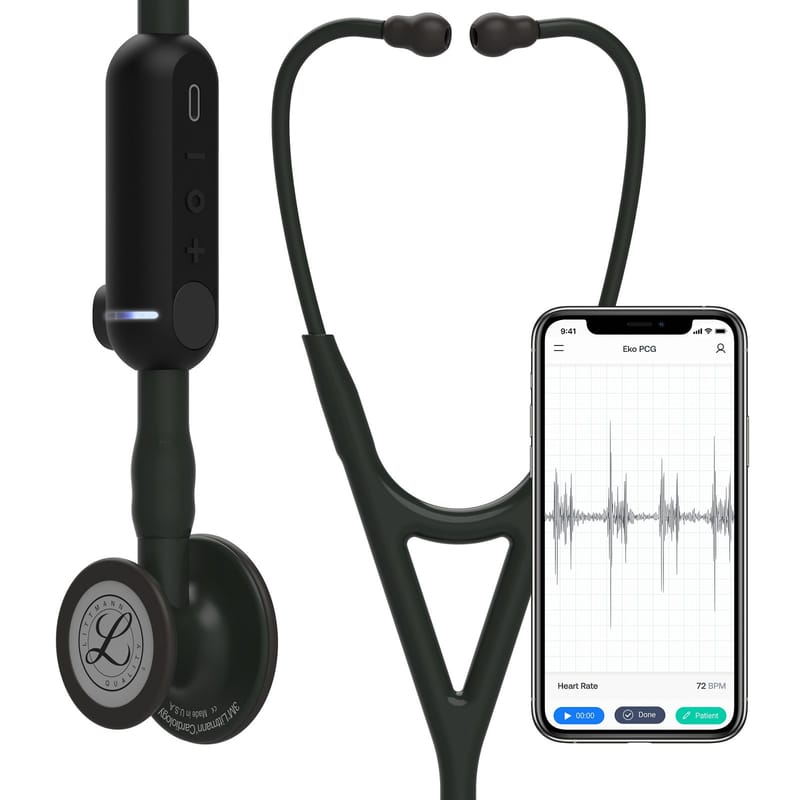
3M™ Littmann® CORE Digital Stethoscope, 8480, High Polish Copper-finish →
Run the scoring matrix as a multidisciplinary exercise. Clinicians, biomedical engineering, IT, infection prevention, finance, and procurement each score the criteria they own, then reconcile differences in a single review meeting. This reduces fragmented decisions and produces a stronger audit trail.
Using a Medical Equipment Procurement Checklist for Consistent Results
A procurement checklist ensures nothing falls through the cracks and creates consistency across multiple equipment purchases. Your checklist should include:
- Clinical needs documented and approved by relevant stakeholders
- Technical specifications defined in writing
- Budget approved and allocated
This checklist becomes your quality control mechanism. Use it for every procurement decision above a certain threshold. It prevents individual preferences from overriding systematic evaluation and creates accountability for procurement outcomes.
Total Cost of Ownership and Medical Procurement ROI Calculation
Equipment purchase price is only the beginning. The true cost includes installation, training, consumables, maintenance, repairs, software licensing, downtime, upgrades, and eventual disposal. Organizations that ignore total cost of ownership often find their "bargain" equipment becomes expensive over its lifecycle. This is one of the areas most procurement guides treat superficially, so here is a practical model you can apply directly.
A lifecycle cost worksheet you can reuse
Build a single worksheet per candidate device and project costs across the expected useful life. A workable structure:
| Cost category | What to capture | Typical questions to ask the vendor |
|---|---|---|
| Acquisition | Purchase price, delivery, installation, commissioning | What is included versus billed separately? |
| Training | Initial and refresher training, competency validation | Is training included, and for how many staff? |
| Consumables | Per-procedure or per-use supplies | What is the annual volume and unit cost? |
| Maintenance and service | Preventive maintenance, repairs, service contract | What does the warranty cover, and what is the post-warranty rate? |
| Software and licensing | Subscription, upgrades, module fees | What is the support period and upgrade path? |
| Downtime | Backup capacity, loaner equipment, lost throughput | What response time is guaranteed? |
| Utilities and facilities | Power, cooling, space, infrastructure changes | What site requirements must we meet? |
| End of life | Decommissioning, disposal, take-back, refurbishment | Is a take-back or trade-in program available? |
Total the projected costs over the useful life, then compare candidates on that total rather than on sticker price. A device with a higher purchase price but lower consumable and service costs frequently wins on lifecycle cost.
Worked comparison pattern
A common pattern: a lower-priced diagnostic device may carry higher annual service and consumable costs, while a higher-priced alternative bundles service and uses cheaper consumables. Project both over the expected life, including downtime exposure, and the ranking can reverse. The point is not a specific number but the discipline of comparing like-for-like across the full lifecycle.
Calculating ROI where revenue or efficiency is affected
For equipment that generates revenue or improves efficiency, calculate ROI alongside TCO. If a new device enables procedures previously referred out, estimate the revenue impact.
Procurement decisions based on total cost of ownership consistently outperform those based on purchase price alone. Build the worksheet once, reuse it for every candidate, and keep the assumptions visible so finance and clinical stakeholders can challenge them.
E&E Medicals and Consulting Inc provides a reliable source for high-quality medical supplies tailored specifically for healthcare professionals, committed to supporting your practice by offering affordable pricing without compromising on the quality of essential equipment.
Lifecycle Management, Compliance, and Sustainable Procurement
Equipment doesn't end when you deploy it. Lifecycle management spans from installation through eventual replacement or disposal.
Establish preventive maintenance schedules and track compliance.
Plan for software updates and cybersecurity. Connected medical devices introduce cybersecurity risks that many organizations overlook.
Consider sustainable procurement practices. Medical equipment eventually reaches end-of-life.
Track equipment use and outcomes. Are you actually using the equipment you purchased?
E&E Medicals and Consulting Inc specializes in helping healthcare organizations source high-quality medical equipment through a simplified procurement experience. We provide fast delivery, secure payment processing, and access to professional-grade diagnostic equipment and clinical supplies that meet your specifications without compromising on quality. Shop our diagnostic equipment and clinical supplies to see how we support healthcare professionals with the tools they need for excellent patient care.
Frequently Asked Questions
What are the key steps in the clinical equipment procurement process?
The medical equipment procurement process begins with defining clinical needs through multidisciplinary stakeholder consultation. Next, develop detailed equipment specifications aligned with clinical outcomes and patient safety requirements. Evaluate potential suppliers based on quality certifications, service support, and compliance credentials. Request competitive proposals, compare total cost of ownership across options, and conduct clinical testing where appropriate. Finally, establish maintenance and performance monitoring protocols post-purchase. This structured approach ensures you select equipment that meets clinical demands while optimizing value.
How should I evaluate medical equipment vendors?
Medical equipment vendor evaluation requires assessing multiple dimensions: verify regulatory compliance and relevant certifications (such as International Electrotechnical Commission standards), review warranty and service support offerings, check delivery timelines and logistics capabilities, confirm payment security and data protection certifications, and request references from similar healthcare settings. For high-value purchases like diagnostic equipment, request product demonstrations and ask about integration with your existing systems. E&E Medicals, for example, emphasizes secure payments, fast delivery, and professional-grade quality across its range of clinical equipment.
What should be included in a medical equipment procurement checklist?
A comprehensive medical equipment procurement checklist should cover: clinical specifications and performance requirements, regulatory and compliance requirements, total cost of ownership (including maintenance and consumables), supplier credentials and certifications, warranty and service terms, delivery and installation timelines, staff training requirements, integration with existing systems, cybersecurity and data storage protocols, and post-purchase performance metrics. This systematic approach prevents costly oversights and ensures procurement aligns with clinical outcomes, patient safety, and budget constraints across your healthcare organization.
How do I calculate medical procurement ROI?
Medical procurement ROI calculation extends beyond purchase price to include total cost of ownership. Calculate the sum of equipment cost, installation, training, maintenance contracts, consumables, and expected lifespan. Then measure returns through improved clinical outcomes, reduced procedure time, decreased staff workload, lower error rates, and extended equipment life. For example, portable diagnostic devices like the CardioChek PA Analyzer ($721.99) reduce point-of-care testing costs while improving efficiency. Compare this investment against baseline spending and quantify time savings and improved patient throughput to determine true ROI over the equipment's lifecycle.
What makes a supplier different when evaluating medical equipment options?
Key differentiators include delivery speed and reliability, transparent pricing without hidden fees, integrated inventory management systems, responsive customer support, and certified quality standards. E&E Medicals distinguishes itself through affordable pricing without quality compromise, fast delivery, and secure payment processes tailored for healthcare professionals. When comparing suppliers, verify they handle your full range of needs, whether diagnostic equipment, mobility aids, or infection prevention products, rather than requiring multiple vendors. Request case studies or references from similar facilities to validate their track record on on-time delivery and customer service.
Why is total cost of ownership important in clinical equipment procurement?
Total cost of ownership reveals the true financial impact of equipment purchases beyond the initial price tag. It includes maintenance contracts, replacement parts, consumables, training, and potential downtime costs. For instance, a diagnostic device requires ongoing calibration, test strips, or software updates. By analyzing total cost of ownership, you avoid selecting cheap equipment with expensive ongoing costs or poor reliability. This analysis supports value-based procurement decisions that balance upfront investment with long-term performance and clinical outcomes, ultimately improving your healthcare organization's financial efficiency and patient care quality.
How can equipment standardization improve procurement efficiency?
Equipment standardization reduces complexity by consolidating purchases around proven, compatible devices across departments. This approach streamlines staff training, simplifies maintenance and repair logistics, improves inventory management, and strengthens supplier relationships through higher volumes. When multiple departments standardize on compatible equipment, such as using the same diagnostic devices or monitoring systems, you reduce procurement overhead, negotiate better pricing through consolidated orders, and improve clinical consistency. Standardization also supports supply continuity and resilience by reducing the number of vendor relationships and technical specifications to manage.