 How-to
How to Choose a Diagnostic Otoscope: A Buyer's Guide
Table of Contents
- How to Choose a Diagnostic Otoscope: Key Criteria
- Diagnostic Otoscope Features That Matter Most
- Otoscope with LED Light: Why It Matters
- Otoscope Specula Sizes and Compatibility
- Best Otoscope for Doctors: Comparing Your Options
- Infection Prevention and Speculum Management
- Clinical Limitations: When an Otoscope Cannot Support Diagnosis
- Durability, Cost, and Long-Term Ownership
- Frequently Asked Questions
Last Updated: October 19, 2026
How to Choose a Diagnostic Otoscope: Key Criteria
The core decision framework rests on three factors: intended use, clinical setting, and features that support reliable visualization. At E&E Medicals and Consulting Inc, we help healthcare professionals focus on the practical differences that matter most in patient care.
Ask yourself: Will you use this primarily for adult or pediatric patients? Do you need documentation, or is real-time visualization enough? How important is portability versus stationary performance? Your answers determine which features are non-negotiable.
Diagnostic Otoscope Features That Matter Most
Not all otoscopes are built the same, but marketing language makes them sound identical. To choose well, apply objective criteria to any device, whether reading a spec sheet or holding the instrument.
Magnification and Image Clarity
Magnification alone doesn't guarantee diagnostic accuracy, what matters is seeing the tympanic membrane clearly enough to detect pathology.
Image clarity depends on the optical lens, the brightness and evenness of illumination, and your ability to focus. A poorly lit otoscope with high magnification is worse than a well-lit one with standard magnification.
Look for a broad, unobstructed field of view: you should see the entire tympanic membrane and surrounding canal without repeatedly repositioning the speculum.
Objective criteria to apply:
- Field of view: Can you see the entire tympanic membrane and the annulus in one view without moving the speculum? A narrow field forces repeated repositioning and increases patient discomfort.
- Focus range: Does the lens focus smoothly across the depth of the canal, or does it require hunting? A good focus mechanism moves predictably and holds its setting.
- Glare control: Does the illumination create a hot spot that washes out detail on the tympanic membrane? Uneven or excessive glare is a common weakness in low-cost LED systems.
- Color fidelity: Does the image render the tympanic membrane's natural color accurately? A system that shifts everything toward blue or yellow makes it harder to distinguish erythema from normal vascularity.
- Illumination uniformity: Is the light evenly distributed across the field, or does it fall off at the edges? Uniform illumination matters more than peak brightness for detecting subtle findings.
Light Source: LED vs Fiber-Optic Illumination
Illumination type directly affects what you can see. Fiber-optic sources deliver a bright, focused beam through a thin cable to the speculum tip, producing intense illumination with minimal heat at the patient's ear.
LED illumination is increasingly common: durable, low-maintenance, and cooler than halogen.
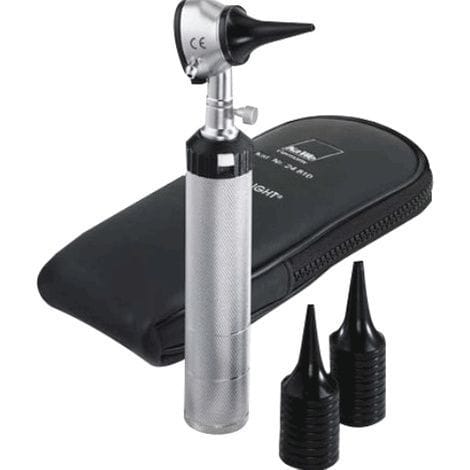
The Mabis DMI KaWe Standard EUROLIGHT C10 Otoscope uses halogen fiber-optic illumination with a 2.5V vacuum bulb, delivering intensive white circular light many clinicians prefer for brightness and consistency, well suited to daily, multi-patient use.
Objective criteria to apply:
- Color temperature: Halogen and fiber-optic systems typically render warmer, more natural tissue color; LED systems vary widely and should be checked for color accuracy, not just brightness.
- Illumination uniformity: Look for a beam that fills the speculum evenly rather than a central hot spot with dim edges.
- Heat at the speculum tip: Fiber-optic and LED designs run cooler than direct halogen bulbs, which matters for pediatric comfort and longer examinations.
- Bulb lifespan and replacement: Halogen bulbs may last 50-100 hours of use; LED systems typically last far longer but may not be user-replaceable. Factor replacement cost and downtime into the decision.
Otoscope with LED Light: Why It Matters
LED technology has transformed otoscope design by reducing maintenance and improving reliability.
Halogen bulbs fade gradually and can burn out mid-examination, while LED systems maintain consistent brightness throughout their lifespan, critical in high-volume settings like urgent care centers or teaching hospitals.
LED otoscopes also run cooler, improving comfort during longer procedures, particularly valuable with pediatric patients, who are more sensitive to warmth near the ear canal.
Otoscope Specula Sizes and Compatibility
Speculum selection is often overlooked but critical for diagnostic accuracy and infection prevention.
The rule is simple: use the largest speculum that fits comfortably in the patient's ear canal without touching the canal walls.
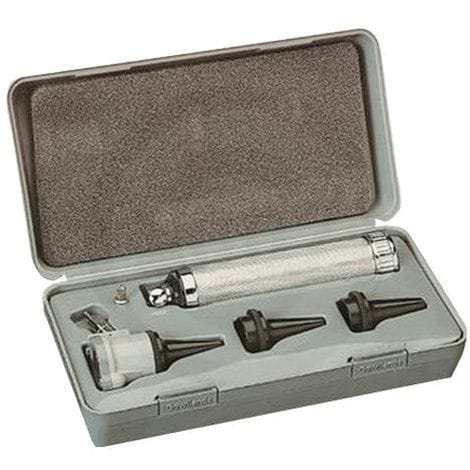
Compatibility matters: not all specula fit all otoscope heads. The Graham-Field Standard Otoscope Set includes three aural specula (small, medium, large) and one nasal speculum as push-fit attachments, straightforward and reliable, though it requires manual changes between patients.
The Medline Ri-Scope L3 Otoscope Heads feature an SpecEjec specula ejection device that reduces cross-contamination by allowing you to eject the used speculum without touching it.
Best Otoscope for Doctors: Comparing Your Options
Traditional vs Digital Otoscopes
Traditional otoscopes remain the gold standard for routine clinical examination: reliable, requiring minimal training, and providing direct visualization without the lag or connectivity issues of digital systems.
Digital otoscopes add camera and screen capabilities for documentation and telehealth, but introduce complexity, battery life, software updates, screen displays.
If you need to document findings or share images with specialists, a digital system adds value.
Graham-Field Standard Otoscope Set →
Home Use vs Professional Clinical Settings
Professional clinical otoscopes are built for daily use by trained examiners, with superior optics, durable construction, and better illumination.
The Welch Allyn 3.5V Nickle-Cadmium Rechargeable Ophthalmoscope/Otoscope Set represents professional-grade equipment.
For home use or occasional screening, a simpler option like the Graham-Field Standard Otoscope Set provides adequate functionality at a lower price point.
Infection Prevention and Speculum Management
Infection prevention starts with speculum management. Every patient should receive a clean or sterile speculum; cross-contamination through shared specula is a real risk, especially with active ear infections.
Clean the otoscope head between patients per manufacturer guidelines. Most modern heads can be wiped with appropriate disinfectant; some, like the Graham-Field model, are fully sterilizable and autoclavable for maximum infection-control flexibility.
A practical speculum management protocol:
- Before the examination: Inspect the speculum for damage or debris. If using a reusable speculum, confirm it has been sterilized and stored properly. If using a disposable speculum, check that it seats firmly on the otoscope head, a loose fit causes light leakage and reduces image clarity.
- During the examination: Use the largest speculum that fits comfortably in the patient's ear canal without touching the canal walls. This maximizes your field of view and ensures a good seal. Avoid touching the speculum tip to any surface once it has been placed in the ear.
- After the examination: If using a disposable speculum, eject it directly into waste without touching it, devices like the Medline Ri-Scope L3 with the SpecEjec ejection system are designed for this. If using a reusable speculum, remove it and place it in the designated collection container for cleaning and sterilization.
- Between patients: Wipe the otoscope head and handle with a facility-approved disinfectant. Allow the manufacturer-specified contact time before the next use. Do not immerse non-waterproof handles.
Compatibility checks before you buy:
- Disposable specula: Not all otoscope heads accept all disposable speculum designs. Verify that your chosen otoscope is compatible with the disposable specula your facility stocks, or confirm a reliable supply before committing.
- Reusable specula: Confirm that your sterilization equipment can handle the specula without damaging the otoscope head. Autoclavable models like the Graham-Field Standard Otoscope Set give you maximum flexibility, but check the manufacturer's temperature and cycle limits.
- Ejection mechanisms: If you prioritize infection prevention, a specula ejection device reduces the need to touch used specula. The Medline Ri-Scope L3's SpecEjec system is one example; confirm that replacement specula for the ejection mechanism are readily available and affordable.
Clinical Limitations: When an Otoscope Cannot Support Diagnosis
An otoscope is a visualization tool, not a diagnostic device.
Cerumen impaction is the most common limitation: when the canal is completely blocked, no otoscope can visualize the tympanum.
Otoscopy also has significant limitations in pediatric patients. Young children often cannot tolerate the procedure, and their smaller ear canals make visualization difficult even with appropriate specula.
Perforated eardrums, cholesteatoma, and chronic otitis media with effusion may be visible on otoscopy, but visualization alone cannot guide treatment decisions.
Durability, Cost, and Long-Term Ownership
Total cost of ownership extends beyond purchase price: consider battery life, bulb replacement frequency, repair costs, and warranty coverage.
Traditional otoscopes with replaceable bulbs have higher ongoing costs if you're using them daily.
Rechargeable systems like the Welch Allyn model offer economic advantages in high-volume settings.
Durability varies by design.
| Feature | Graham-Field Standard | Mabis DMI KaWe EUROLIGHT C10 | Welch Allyn 3.5V Rechargeable | Medline Ri-Scope L3 |
|---|---|---|---|---|
| Light Source | Not specified | Halogen fiber-optic | Not specified | Xenon or LED compatible |
| Magnification | Standard | 3x with rotating lens | Standard | 3x plus 1x arm |
| Specula Included | 3 aural, 1 nasal | Not specified | Not specified | SpecEjec ejection device |
| Sterilizable | Yes | Not specified | Not specified | Not specified |
| Price | $174.99 | $223.28 | $247.51 | $240.40 |
| Best For | Basic screening, cost-conscious practices | Bright illumination needs | High-volume clinics | Infection prevention priority |
E&E Medicals and Consulting Inc carries all these options, giving you access to professional-grade diagnostic equipment at affordable pricing.
Frequently Asked Questions
What features should a diagnostic otoscope have?
A diagnostic otoscope should include adequate magnification (typically 3x), a bright light source with minimal glare, and a field of view wide enough to visualize the entire tympanic membrane. Fiber-optic or LED illumination provides superior clarity compared to older halogen sources. The device must accommodate multiple speculum sizes to fit different ear canal diameters across pediatric and adult patients. An adjustable rheostat (brightness control) and rotating lens allow precise focus and positioning. For clinical use, the otoscope head should be compatible with reusable or disposable specula, and the handle should feel balanced and comfortable during extended examination periods.
What is the difference between an otoscope with LED light and fiber-optic illumination?
LED lights offer consistent brightness, longer lifespan, and cooler operation compared to halogen bulbs, making them ideal for high-volume clinical settings. Fiber-optic illumination, combined with halogen or xenon bulbs, delivers an intense, focused beam of white light that provides excellent visualization of the ear canal and tympanic membrane. Fiber-optic systems typically produce a broader, unhindered line of sight with minimal glare. Both approaches support accurate diagnostic examination; the choice depends on your facility's preference for maintenance requirements, replacement costs, and light intensity needs.
How do otoscope specula sizes affect examination accuracy?
Specula come in small, medium, and large sizes to accommodate different ear canal diameters. Using the correct size ensures a proper seal and allows full visualization of the tympanic membrane without discomfort to the patient. Too small a speculum leaves blind spots; too large risks patient discomfort and incomplete examination. Pediatric patients typically require small specula, while adults usually need medium or large. A diagnostic otoscope should include at least three aural specula sizes plus a nasal speculum for versatility. Disposable specula reduce cross-contamination risk and are essential for infection prevention in high-volume clinical environments.
What's the best otoscope for a busy medical practice or hospital?
For high-volume clinical settings, choose an otoscope with a rechargeable handle to eliminate battery replacement downtime, fiber-optic or LED illumination for consistent brightness, and compatibility with disposable specula to reduce sterilization time and infection risk. A balanced, lightweight design reduces hand fatigue during extended use. Look for models with an adjustable rheostat and rotating lens for precise focus. The Welch Allyn 3.5V Rechargeable Ophthalmoscope/Otoscope Set ($247.51) offers a desk or wall-charger handle for convenient charging, while the Medline Ri-Scope L3 ($240.40) features fiber-optic illumination with LED or Xenon options and an easy-to-use speculum ejection device to reduce cross-contamination.
Selecting a diagnostic otoscope requires balancing optical quality, durability, and practical features against your actual clinical needs. E&E Medicals and Consulting Inc provides access to proven professional-grade otoscopes with fast delivery and affordable pricing. Shop our diagnostic otoscope selection to find the right tool for your practice.