 blog
blog
Essential First Aid for Businesses: Safety Guide
Table of Contents
- OSHA Workplace First Aid Requirements Every Business Must Know
- Workplace First Aid Kit Checklist: What to Include
- Bulk Medical Supply Procurement for Businesses
- First Aid Kit Maintenance Schedule and Replenishment
- Psychological First Aid and Remote Work Considerations
- Budgeting and ROI of Workplace Safety Compliance
- Frequently Asked Questions
Last Updated: September 23, 2026
OSHA Workplace First Aid Requirements Every Business Must Know
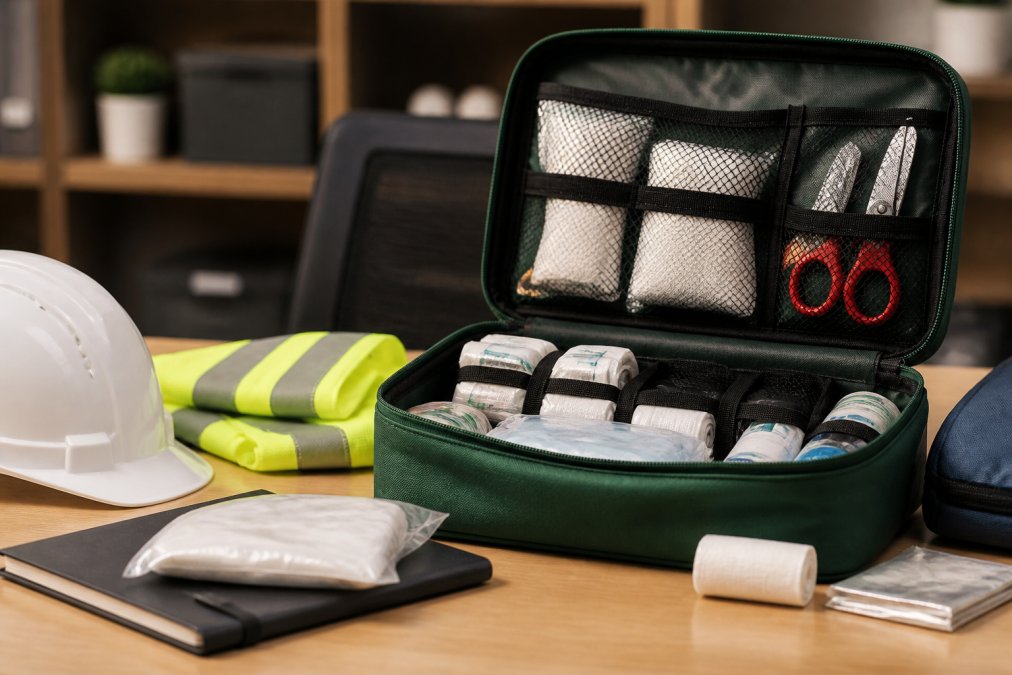
Essential first aid for businesses is the practice of keeping trained staff, stocked kits, and clear response steps on site so injuries get handled fast and correctly, making it essential first aid for businesses of every size. This guide from E&E Medicals and Consulting Inc breaks down what to stock, how to maintain it, and how to budget for it.
The rules are not optional. Under OSHA's medical and first aid standard (29 CFR 1910.151), every employer must ensure medical personnel or trained first-aiders are available for advice and treatment.
Key OSHA Regulations for First Aid
OSHA's core rule is short: if there's no infirmary, clinic, or hospital nearby, someone trained in first aid must be on site. The supplies must match the hazards your team actually faces.
- 1910.151(b): Trained first-aid responders must be available.
- 1910.151(c): Eyewash or flushing facilities where eyes can be exposed to corrosives.
- 1910.1030: Bloodborne pathogen protections, including gloves and disposal.
- 1910.266: Logging operations require more advanced trauma supplies.
ANSI/ISEA Z308.1 Standards Explained
ANSI/ISEA Z308.1 is the voluntary standard that defines what a workplace first aid kit must contain. It splits kits into two classes based on risk and workplace size.
- Class A kits: For common, low-risk workplaces like offices and retail.
- Class B kits: For higher-risk settings like warehouses and manufacturing.
Workplace First Aid Kit Checklist: What to Include
A workplace first aid kit checklist should cover bleeding, burns, eye injuries, and infection control at minimum. Match the contents to your hazards, then check the kit on a set schedule.
Essential Supplies for Every Business
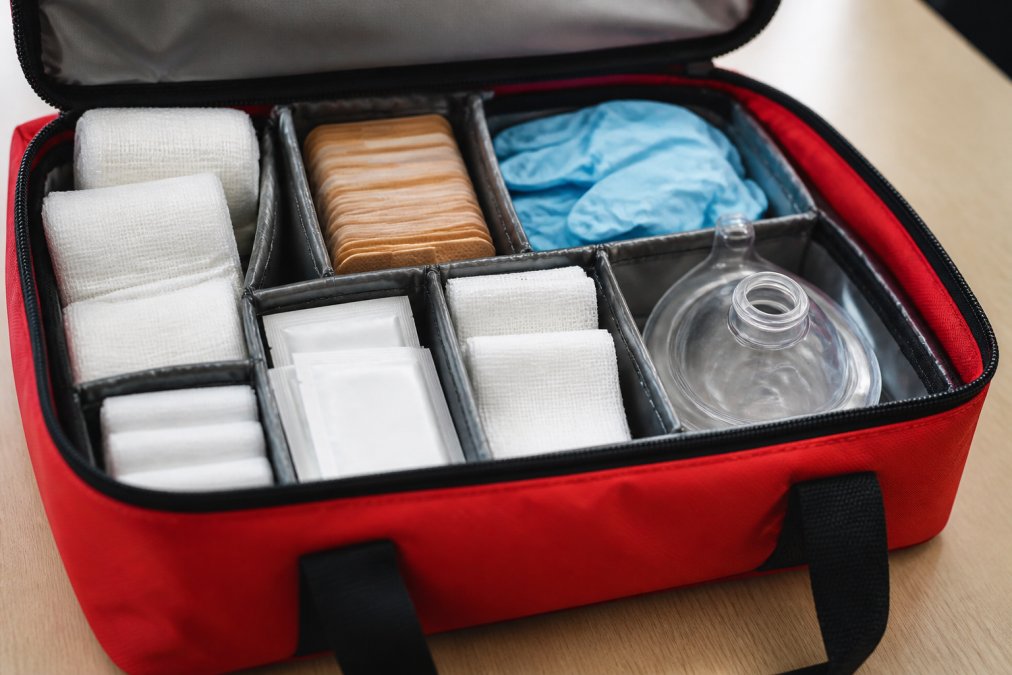
Every kit needs the basics for cuts, scrapes, and minor burns. Keep these stocked and easy to find.
- Adhesive bandages in assorted sizes
- Sterile gauze pads and rolled gauze
- Adhesive tape and elastic bandages
- Antiseptic wipes and burn ointment
- Nitrile gloves and a CPR face shield
- Scissors, tweezers, and a thermometer
- Instant cold packs and a first aid guide
ANSI Z308.1 Minimum Quantities by Kit Class
ANSI/ISEA Z308.1 sets minimum counts, not just item types. Class A kits serve low-risk offices and retail spaces; Class B kits serve higher-risk warehouses, manufacturing, and construction. The table below reflects the commonly cited minimums from the standard.
| Item | Class A Minimum | Class B Minimum |
|---|---|---|
| Adhesive bandages (1" x 3") | 16 | 50 |
| Adhesive tape (2.5 yd) | 1 | 2 |
| Antibiotic ointment (0.5 g) | 10 | 25 |
| Antiseptic wipes | 10 | 50 |
| Burn dressing (4" x 4") | 1 | 2 |
| Burn ointment (0.9 g) | 10 | 25 |
| Cold pack (4" x 5") | 1 | 2 |
| Eye covering (2.9 sq in) | 2 | 2 |
| Eye/skin wash (1 oz) | 1 | 1 |
| First aid guide | 1 | 1 |
| Hand sanitizer (0.9 g) | 10 | 20 |
| Medical exam gloves (pair) | 2 | 4 |
| Roller bandage (2" x 4 yd) | 1 | 2 |
| Scissors | 1 | 1 |
| Sterile gauze pad (3" x 3") | 4 | 8 |
| Triangular bandage (40" x 40" x 56") | 1 | 2 |
| Tweezers | 1 | 1 |
Specialized Kits for Specific Workplaces
One kit does not fit every business. A food service kitchen needs burn supplies. A lab needs eyewash and spill response. A construction crew needs trauma gear.
| Industry | Add to the ANSI Baseline | Why |
|---|---|---|
| Office / retail | Extra bandages, hand sanitizer | High frequency of minor cuts and scrapes |
| Food service | Burn gel, finger cots, blue detectable bandages | Burns and knife cuts are common; blue bandages are visible in food |
| Warehouse / manufacturing | Tourniquet, trauma dressings, eye wash | Crush, laceration, and chemical splash risks |
| Construction | Tourniquet, splints, large trauma dressings | Falls, struck-by, and amputation hazards |
| Laboratory | Eyewash, spill kit, burn gel | Chemical exposure and thermal burns |
| Remote / field crews | Portable Type II or III kit, extra gloves | No nearby clinic; delayed EMS response |
Bulk Medical Supply Procurement for Businesses
Bulk medical supply procurement for businesses means buying first aid and safety supplies in volume to cut per-unit costs and avoid running out. The goal is a steady pipeline, not one big annual order.
- Buy high-turnover items in bulk
- Keep low-turnover trauma items at minimum stock
- Consolidate vendors to simplify ordering
- Track usage by department
First Aid Kit Maintenance Schedule and Replenishment
A first aid kit maintenance schedule is a written plan for checking, restocking, and replacing supplies on a set timeline. Without one, kits quietly degrade until an emergency exposes the gaps.
Here's a simple schedule that works for most workplaces.
| Task | Frequency | Who Does It |
|---|---|---|
| Visual check of kit contents | Monthly | Office manager |
| Restock used or expired items | Monthly | Supply coordinator |
| Full inventory audit | Quarterly | Safety lead |
| Replace expired medications | Every 6 months | Safety lead |
| Review hazards and kit fit | Annually | Safety committee |
Psychological First Aid and Remote Work Considerations
Psychological first aid is the practice of giving calm, practical support to someone after a traumatic event, and it belongs in your workplace plan. Physical injuries are not the only ones that need a response.
What Psychological First Aid Actually Looks Like
Psychological first aid is not counseling. It is a set of early, practical actions anyone can learn. The core steps are:
- Check safety. Make sure the person is physically safe and away from the immediate hazard.
- Stay calm and present. Speak slowly, use the person's name, and avoid judgment.
- Listen without fixing. Let them describe what happened in their own words.
- Connect to basics. Water, a quiet space, a phone call to family, a ride home.
- Link to support. Offer the EAP number, a trusted manager, or a clinician if needed.
Remote and Hybrid Team First Aid
Remote and hybrid teams need a different approach. A home office has no wall-mounted kit and no front-desk responder. If a remote worker is injured or has a panic attack during work hours, the response falls to whoever is on the other end of a chat message.
A workable remote first aid plan includes:
- Ship a small first aid kit to each remote worker, sized to their home hazards.
- Share a digital checklist for home kit contents and ask for a photo confirmation.
- Keep a virtual responder on call during work hours, with a backup.
- Point remote staff to local emergency numbers and their nearest urgent care.
- Include a mental health contact, not just a physical injury contact.
Interactive Digital Checklists
Paper logs do not work for distributed teams. A shared online form lets remote staff confirm their kit is stocked, flag what they need, and upload a photo. The same form can double as a monthly inspection log for on-site kits.
A simple digital checklist should capture:
- Kit location and owner
- Date of last inspection
- Items below par level
- Expiration dates for medications and ointments
- Photo of the open kit
Budgeting and ROI of Workplace Safety Compliance
Budgeting for safety compliance is not just a cost line. It reduces downtime, lowers injury severity, and protects you from fines.
- Set an annual supply budget per department
- Reserve a buffer for incident-driven restocking
- Factor in training and certification costs
- Track spend against usage to find waste
Frequently Asked Questions
What are the legal requirements for first aid kits in the workplace?
OSHA requires employers to provide first aid supplies that are readily accessible to employees. The specific contents should follow ANSI/ISEA Z308.1 standards, which classify kits by type and class based on workplace hazards. Businesses must conduct a risk assessment to determine the appropriate kit for their environment and ensure supplies are regularly inspected and replenished.
How often should business first aid kits be restocked?
First aid kits should be inspected monthly to check for expired items and missing supplies. A full inventory review is recommended quarterly. Establish a first aid kit maintenance schedule that includes checking expiration dates on medications, ointments, and antiseptic wipes, and replacing used items immediately after any incident.
What items must be in a standard workplace first aid kit?
A standard workplace first aid kit should include adhesive bandages in various sizes, sterile gauze pads, adhesive tape, antiseptic wipes, burn ointment, nitrile gloves, scissors, tweezers, a CPR face shield, and an emergency blanket. For larger workplaces, add a tourniquet, eye wash station supplies, and instant cold packs.
Does my business need a specialized first aid kit?
It depends on your workplace hazards. Offices typically need a basic kit, while manufacturing, construction, or food service environments may require specialized supplies for burns, chemical exposure, or severe bleeding. Conduct a workplace risk assessment to identify specific hazards and choose a kit that addresses those risks.
Workplace safety compliance can feel like a paperwork burden, but it comes down to a few steady habits: the right supplies, a maintenance schedule, and a trained team. E&E Medicals and Consulting Inc makes the supply side easy with fast delivery, secure payments, and affordable pricing on professional-grade medical supplies. Get started with E&E Medicals and Consulting Inc and keep every kit stocked, current, and ready.