 blog
When Should You Use Transmission-Based Precautions?
Last Updated: October 26, 2026
Quick Summary
Transmission-based precautions are additional infection prevention measures implemented when a patient has a known or suspected infection caused by a pathogen spreading through a specific route: contact, droplet, or airborne. They supplement standard precautions and target that transmission route to prevent spread.
- Standard precautions apply to every patient; transmission-based precautions apply only to patients with specific known or suspected infections.
- The three types of transmission-based precautions are contact, droplet, and airborne, each targeting a different transmission route.
- Contact precautions require gloves and gowns; droplet precautions require surgical masks within 3-6 feet; airborne precautions require N95 respirators.
- Transmission-based precautions must continue until the patient no longer poses a transmission risk, based on pathogen biology and clinical status.
- When the route is unclear, err toward the more protective tier until the pathogen is identified.
Table of Contents
- Standard Precautions: The Foundation of Infection Prevention
- When Transmission-Based Precautions Become Necessary
- Contact Precautions: Preventing Direct and Indirect Transmission
- Droplet Precautions: Protecting Against Respiratory Secretions
- Airborne Precautions: Managing Airborne Infectious Agents
- Personal Protective Equipment for Isolation Precautions
- Discontinuing Transmission-Based Precautions: Duration and Criteria
- Selecting the Right Infection Prevention Supplies for Your Facility
- Frequently Asked Questions
Standard Precautions: The Foundation of Infection Prevention
They assume every patient encounter carries transmission risk and require consistent hand hygiene, safe injection practices, respiratory hygiene, and proper PPE use. The core principle: treat all blood and body fluids as potentially infectious.
Hand hygiene is the single most critical standard precaution: washing or alcohol-based sanitizer before and after patient contact, before clean procedures, and after body fluid exposure prevents most healthcare-associated infections.
Safe injection practices and environmental cleaning also fall under standard precautions, addressing contaminated surfaces, patient-care equipment, and sharps safety. Consistently applied across all encounters, they significantly reduce transmission risk.
When Transmission-Based Precautions Become Necessary
Transmission-Based Precautions are additional measures implemented when a patient has a known or suspected infection caused by a pathogen spreading through a specific route. They supplement standard precautions and target that route, contact, droplet, or airborne.
The practical question is not "what are transmission-based precautions?" but "when do I add them, and which one?"
A practical decision sequence
- Start with standard precautions for every patient. They are never optional and never replaced by transmission-based precautions.
- Ask whether the patient has a known or suspected infection. A confirmed positive test, a compatible clinical syndrome, or an epidemiological link (e.g., exposure during an outbreak) all qualify.
- Identify the route. Does the pathogen spread mainly by direct or indirect contact, by large respiratory droplets, or by airborne particles? If the route is unclear, err toward the more protective tier until the pathogen is identified.
- Add the matching transmission-based precaution and document the rationale, the start date, and the discontinuation criteria.
- Reassess when the clinical picture changes, new symptoms, new test results, or a change in the patient's ability to contain secretions.
Common triggers, by route
| Clinical cue | Likely route | Precaution to add |
|---|---|---|
| Unexplained diarrhea in a hospitalized patient | Contact | Contact precautions |
| Known MRSA, VRE, or C. difficile | Contact | Contact precautions |
| Fever with cough or respiratory symptoms | Droplet (until ruled out) | Droplet precautions |
| Suspected or confirmed tuberculosis | Airborne | Airborne precautions |
| Rash with fever and known exposure | Airborne (e.g., varicella, measles) | Airborne precautions |
| Draining wound not contained by dressing | Contact | Contact precautions |
Worked scenarios
Scenario 1, Suspected influenza in the emergency department. A patient arrives with fever, cough, and myalgia during flu season. Until influenza is confirmed or excluded, use droplet precautions with a surgical mask for source control within 3-6 feet.
Scenario 2, Changing symptoms on a medical ward. A patient admitted for pneumonia develops new watery diarrhea. The working assumption shifts from droplet to contact precautions until C. difficile or another contact-transmitted pathogen is excluded.
Scenario 3, Routine care of a colonized patient. A long-term care resident with a known MRSA colonization history needs routine wound care. Standard precautions plus contact precautions apply for the wound care encounter; the resident can still participate in group activities if the wound is contained and hand hygiene is maintained.
How the two tiers relate in practice
Standard precautions apply to every patient encounter; transmission-based precautions apply only to patients with a specific known or suspected infection. The two are additive, not alternatives: a patient on contact precautions still receives standard precautions, hand hygiene, safe injection practices, and appropriate PPE, for every encounter. This layered model concentrates additional resources on the highest-risk patients while maintaining a consistent baseline everywhere else.
Contact Precautions: Preventing Direct and Indirect Transmission
Contact precautions prevent transmission through direct contact with the patient or indirect contact with contaminated surfaces and equipment, applying when the infectious agent spreads through touching the patient's skin or contaminated materials.
Diseases requiring contact precautions include methicillin-resistant Staphylococcus aureus (MRSA), vancomycin-resistant enterococci (VRE), norovirus, and certain antibiotic-resistant gram-negative bacteria.
Contact precautions must block both pathways: direct contact (touching the patient's skin or infected wounds) and indirect contact (handling contaminated surfaces, equipment, or shared items without protection). Both require gloves, gowns, and careful hand hygiene.
Single-room isolation is preferred, though cohort placement with patients infected by the same pathogen is acceptable. Environmental cleaning of frequently touched surfaces is heightened, as the agent may survive on surfaces for extended periods.
Droplet Precautions: Protecting Against Respiratory Secretions
Droplet precautions prevent transmission through large respiratory droplets expelled during coughing, sneezing, or talking. These travel only short distances (typically 3-6 feet) before settling, making source control and proximity management the primary strategies.
Conditions requiring droplet precautions include influenza, pertussis, mumps, measles, and certain types of meningitis. Healthcare personnel must wear a surgical mask when within 3-6 feet of the patient.
Respiratory hygiene is central: patients should cover their mouth and nose when coughing or sneezing, dispose of tissues properly, and perform hand hygiene after secretions contact their hands.
Single rooms are preferred, but patients with the same infection can share a room if necessary. The critical factor is maintaining spatial separation and using masks appropriately during care.
Airborne Precautions: Managing Airborne Infectious Agents
Airborne precautions prevent transmission through particles smaller than droplets that remain suspended in air for hours and travel on air currents, requiring the most intensive measures and specific environmental controls.
Diseases requiring airborne precautions include tuberculosis, measles, varicella (chickenpox), and severe acute respiratory infections caused by certain pathogens. Healthcare personnel must wear respiratory protection, typically an N95 respirator or equivalent, when entering the patient's room.
Airborne particles remain viable in air and travel greater distances, demanding stronger protective measures and environmental controls.
Patients should wear surgical masks when leaving isolation rooms for essential procedures or transport. Personnel must use appropriate respiratory protection during all care activities and maintain hand hygiene before and after glove removal.
Personal Protective Equipment for Isolation Precautions
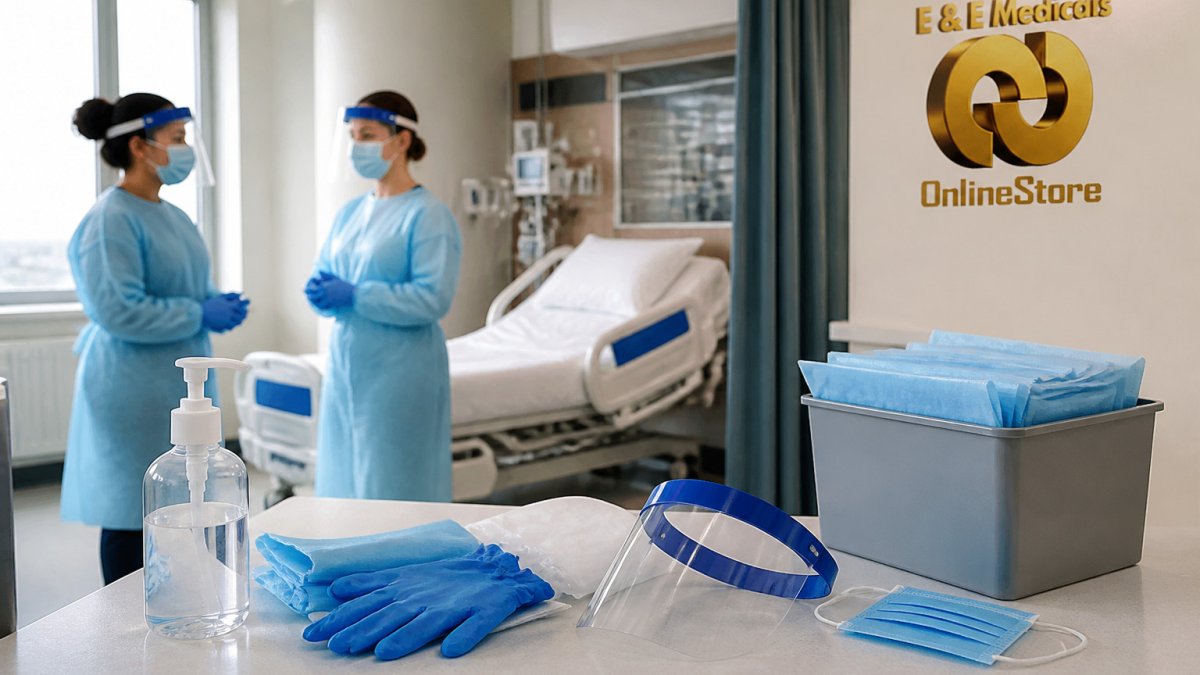
Personal protective equipment (PPE) is a critical barrier between healthcare personnel and infectious agents during both standard precautions and transmission-based precautions.

Gloves protect hands from contact with blood, body fluids, and contaminated surfaces.
Gowns protect against splashing and contact with contaminated materials; choose standard isolation or fluid-resistant gowns based on anticipated exposure.
Masks and respirators differ in their protective function. Surgical masks primarily provide source control, preventing the wearer from transmitting respiratory secretions to others.
Discontinuing Transmission-Based Precautions: Duration and Criteria
Transmission-based precautions must continue until the patient no longer poses a transmission risk, depending on the pathogen, clinical status, and current guidance. Premature discontinuation increases transmission risk; unnecessarily prolonged precautions consume resources and can harm patients through reduced contact and delayed care.
How duration is decided
Duration is rarely a single fixed number. It is set by three inputs:
- Pathogen biology, how long the organism remains viable and transmissible in a given patient.
- Clinical status, fever, symptom improvement, wound containment, and the patient's ability to control secretions.
- Current guidance, national and local infection prevention protocols, which are updated as evidence changes.
Because guidance changes, the safest practice is to check the current protocol for the specific pathogen rather than rely on memory or a single rule of thumb.
Typical discontinuation patterns
| Precaution | Common discontinuation pattern | Notes |
|---|---|---|
| Droplet | Fever-free without antipyretics for 24 hours and symptoms improving | Common for influenza and similar respiratory viruses |
| Contact | Until pathogen clearance or per pathogen-specific protocol | MRSA and VRE often continue for the admission; C. difficile until diarrhea resolves |
| Airborne | Pathogen-specific; tuberculosis typically requires consecutive negative sputum results | Varicella and measles follow different criteria |
These are patterns, not universal rules. Always confirm against the current protocol for the pathogen and setting.
Setting-specific considerations
- Hospitals, Discontinuation is usually tied to the infection prevention team's protocol and documented in the medical record. Reassessment at defined intervals prevents precautions from being forgotten.
- Outpatient clinics, Precautions often end when the patient leaves, but the decision to schedule, defer, or cohorted visits depends on the suspected pathogen. A patient with suspected measles, for example, should not sit in a shared waiting room.
- Long-term care, Duration often extends beyond the acute phase because residents remain colonized or symptomatic longer. Group activities and shared dining require a risk assessment rather than a blanket rule.
- Home care, The family and caregivers become the implementers. Discontinuation guidance must be written in plain language and include who to call if symptoms return.
Documentation and reassessment
Document the start date, rationale, and discontinuation criteria when precautions are initiated. Scheduled reassessment, daily on acute wards, at defined intervals in long-term care, catches patients who meet criteria earlier than expected and prevents precautions from drifting past their useful life, while supporting auditing and quality improvement.
current pathogen-specific isolation guidance
Selecting the Right Infection Prevention Supplies for Your Facility
Healthcare facilities need reliable access to high-quality infection prevention supplies to implement standard precautions and transmission-based precautions effectively. Selection involves evaluating product quality, staff training requirements, cost-effectiveness, and alignment with infection prevention protocols.
At E&E Medicals and Consulting Inc, we provide professional-grade medical supplies for healthcare professionals.
Key considerations include proper sizing for gloves and respirators, appropriate barrier protection levels for gowns, and compatibility with isolation room infrastructure. Hand hygiene products must be accessible at point of care, and staff must be trained on proper application and removal of all PPE.
Establishing relationships with reliable medical supply vendors can support access to critical items. Your facility's infection prevention team should evaluate suppliers based on product quality certifications, delivery timeliness, pricing transparency, and responsiveness to urgent supply needs.
| Precaution Type | Primary Route | Key PPE | Patient Placement | Duration Trigger |
|---|---|---|---|---|
| Standard | All routes | Gloves, gowns, masks as needed | Standard room | All patient encounters |
| Contact | Direct/indirect contact | Gloves, gown | Single room preferred | Until pathogen clearance |
| Droplet | Respiratory droplets | Surgical mask | Single room preferred | 24 hours fever-free |
| Airborne | Airborne particles | N95 respirator | Negative-pressure room | Pathogen-specific criteria |
Frequently Asked Questions
What is the difference between standard precautions and transmission-based precautions?
Standard Precautions apply to all patient encounters and include hand hygiene, safe injection practices, respiratory hygiene, and environmental cleaning. Transmission-Based Precautions are additional measures used when a known or suspected infection requires extra protection based on the route of transmission: contact, droplet, or airborne. Standard Precautions form the baseline; transmission-based precautions layer on top when infection risk is elevated.
When should contact precautions be used?
Contact precautions protect against direct contact and indirect contact transmission. Use them for known or suspected infections spread through skin-to-skin contact or contaminated surfaces, such as methicillin-resistant Staphylococcus aureus (MRSA), vancomycin-resistant enterococci (VRE), and norovirus. Contact precautions require gloves, gowns, dedicated patient-care equipment, and environmental disinfection of contaminated surfaces.
What is the difference between droplet and airborne precautions?
Droplet precautions prevent transmission through respiratory secretions traveling short distances (typically within 6 feet), requiring surgical masks and eye protection. Airborne precautions protect against smaller particles that remain suspended in air and travel longer distances, requiring respirators, negative-pressure isolation rooms, and more stringent environmental controls. Airborne precautions are stricter and apply to infections like tuberculosis and measles.
How long should transmission-based precautions continue for a patient?
Duration depends on the specific infectious agent, clinical status, and treatment response. Healthcare personnel should follow current CDC guidelines and institutional protocols for each pathogen to determine when precautions can be safely discontinued.
Implementing transmission-based precautions correctly requires clear protocols, accessible supplies, and consistent staff training. Your facility's infection prevention success depends on having reliable access to professional-grade equipment and the confidence that your vendor understands the clinical demands of your practice. Shop E&E Medicals and Consulting Inc for the infection prevention supplies your team needs to protect patients and personnel effectively.