 blog
7 Mobility Aid Buying Mistakes Facilities Should Avoid
Last Updated: November 2, 2026
Quick Summary
Facility buyers of mobility aids should match each aid to resident assessments and workflow, not just catalogue specs. Check weight capacity against the heaviest resident, confirm fit with routes and storage, verify cleaning compatibility, and compare total cost of ownership. Avoiding these seven mistakes leads to better purchases.
- Specify weight capacity against the heaviest resident in each group, not the average.
- Confirm each aid's cleaning compatibility with your facility's disinfectant before purchase.
- Measure doorways, lift cars and storage areas before committing to any equipment model.
- Plan maintenance, replacement parts and warranty terms as part of total cost of ownership.
Table of Contents
- Why Facility Mobility Aid Purchasing Differs From Home Use
- Mobility Aids for Hospitals and Care Settings: The Main Categories
- Matching Aids to Resident Assessments and Facility Workflows
- Mobility Aid Safety and Maintenance: Inspection, Cleaning and Infection Control
- Medical Equipment Purchasing Checklist for Facility Buyers
- Requesting Quotes and Specifications From E&E Medicals
- Frequently Asked Questions
Buying mobility aids for a facility is not the same as buying them for a home, and many facility buyers learn that the hard way.
Facility purchasing differs from home use in three ways. Equipment is shared among many residents, so durability and cleaning matter more. Staff, not family members, handle transfers, so training and safe-handling features carry weight. And procurement is governed by budgets, approval chains and inventory systems, so total cost of ownership matters more than the unit price.
Why Facility Mobility Aid Purchasing Differs From Home Use
A home buyer asks whether a rollator feels comfortable. A facility buyer asks whether it will survive 500 resident uses, how it will be disinfected between residents, and whether a newly hired aide can fold and store it correctly.
Start by defining who will use the equipment. Residents with different weights, heights and cognitive abilities may share the same fleet.
Mobility Aids for Hospitals and Care Settings: The Main Categories
Facilities typically stock several categories of mobility aids. Each category solves a different problem, and each has its own buying criteria.
Wheelchairs, Transport Chairs and Mobility Scooters
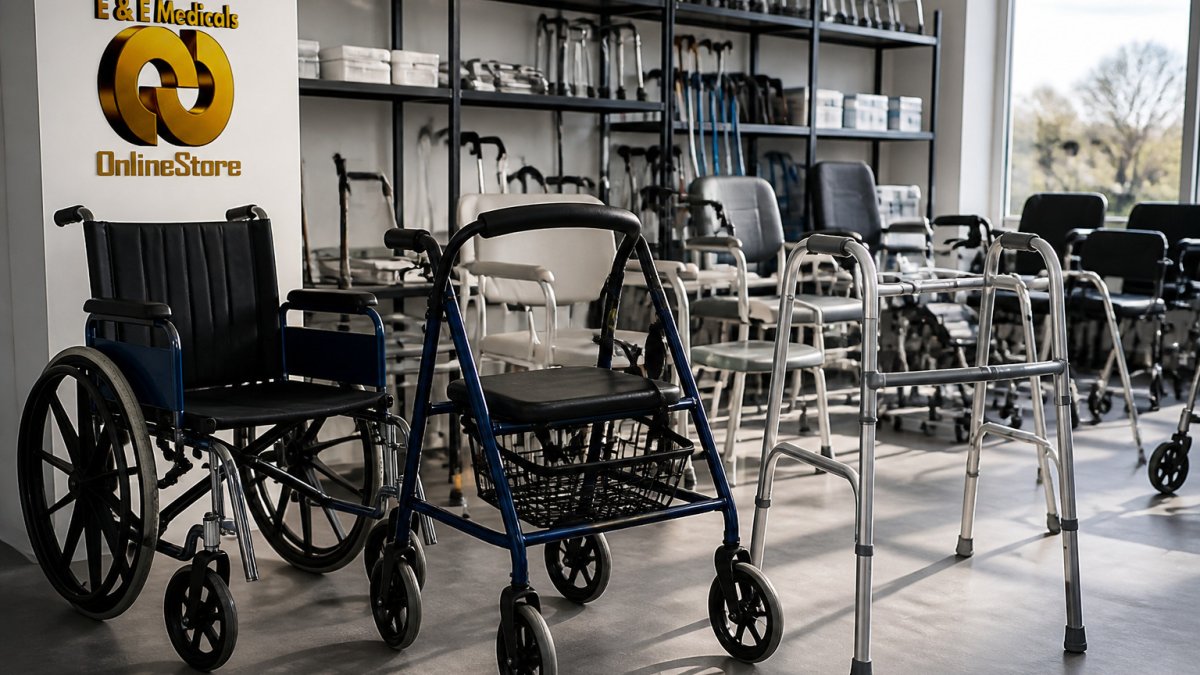
Wheelchairs and transport chairs serve different roles. A transport chair is lightweight and designed to be pushed by staff, usually for short trips between departments. A self-propelled wheelchair gives residents more independence but needs larger hand rims, locking brakes and adequate seat support.
Mobility scooters are less common in clinical settings but appear in long-term care and rehabilitation. Check turning radius, weight capacity and battery charging access before you buy, because a scooter that cannot fit a standard elevator or charging room creates daily friction for staff.
Walkers, Rollators, Canes and Crutches
Walkers and rollators support residents who need stability while walking. A rollator with hand brakes and a seat suits residents who tire on longer walks. A standard walker without wheels suits residents who need firm support during transfers.
Canes and crutches are typically individual items rather than shared fleet equipment. Canes and crutches are usually tracked by resident, since sharing them between residents raises infection-control concerns.
Patient Lifts, Transfer Equipment, Lift Chairs and Adjustable Beds
Patient lifts reduce manual handling injuries for staff, which is one of the most significant risks in care settings. Compare ceiling lifts, mobile floor lifts and sit-to-stand models against your room layouts and your resident profile. Lift chairs and adjustable beds support positioning and comfort. Verify warranty terms and service coverage before committing.
Matching Aids to Resident Assessments and Facility Workflows
The most expensive purchasing mistake is buying equipment before matching it to resident needs. A physiotherapy or nursing assessment should drive the specification, not the catalogue. But a vague instruction to 'match aids to assessments' is not actionable for a purchasing team. What follows is a concrete framework you can adapt to your facility.
Build a resident mobility profile
For each resident group you serve, capture six variables that determine which aid category fits:
- Weight and body dimensions, confirms weight capacity and seat or frame sizing. Always specify against the heaviest resident in the group, not the average.
- Balance and standing tolerance, distinguishes a walker (firm support, limited standing) from a rollator (wheeled, requires some balance and grip strength) from a cane (minimal support, requires good balance).
- Upper-body strength and grip, determines whether a self-propelled wheelchair is realistic or whether a transport chair pushed by staff is safer.
Map each resident group to the aid categories in the previous section. This turns a vague shopping list into a specification you can defend to a budget committee and to an auditor.
Match the aid to the workflow, not just the resident
Equipment that suits a resident but not the staff workflow will sit unused. Ask these questions before you commit:
- Storage: Where will the aid live between uses? A mobile floor lift needs a parking bay; a fleet of rollators needs a designated storage area near the ward entrance. Measure the space.
- Staffing: How many staff are available per shift to handle a transfer? A ceiling lift may require two trained staff; a sit-to-stand lift may need one. Match the equipment to the staffing model you can sustain.
- Route fit: Does the aid fit through doorways, around bathroom corners, into lift cars, and over thresholds? Measure the narrowest point on the resident's typical route. A scooter that cannot fit a standard elevator creates daily friction.
- Turnaround time: How quickly must the aid be cleaned and returned to service between residents? Equipment that takes 20 minutes to disinfect will bottleneck a busy ward.
A simple matching worksheet
Create a one-page worksheet with columns for resident group, weight range, balance level, transfer method, cognitive considerations, indoor/outdoor need, and recommended aid category. Review it quarterly as your resident mix changes. This is the document you hand to a supplier when requesting quotes, and it is the document that justifies your specification during an audit.
Mobility Aid Safety and Maintenance: Inspection, Cleaning and Infection Control
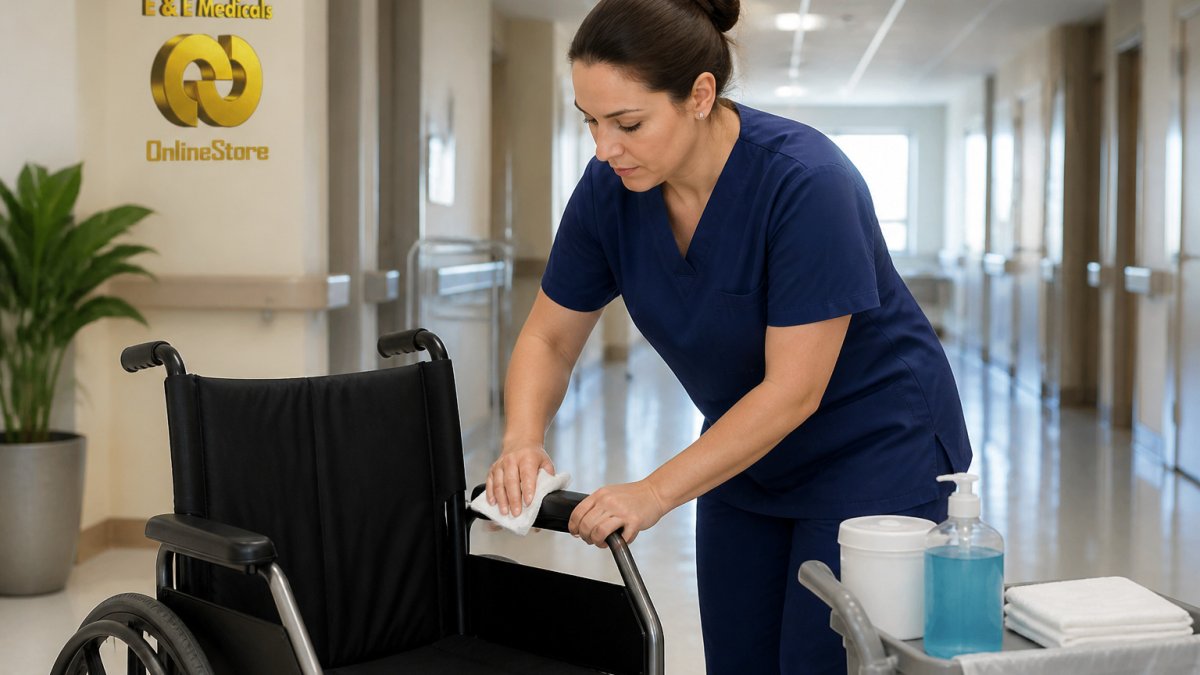
Shared equipment needs a planned maintenance and infection-control routine. Many facilities underestimate this, and it shows up later as broken brakes, worn upholstery, contaminated surfaces, and equipment pulled from service at the worst possible moment.
Specify cleanable materials at purchase
Infection prevention starts with the specification, not the cleaning schedule. When comparing aids, consider asking suppliers for:
- Material compatibility data, which disinfectants the manufacturer has tested against the frame, upholstery, grips, and braking surfaces. Some disinfectants degrade plastics, crack vinyl upholstery, and corrode metal joints over repeated use.
- Smooth, non-porous surfaces, frames and seats that wipe clean without seams or crevices that trap soil.
- Removable or replaceable components, seat cushions, armrest pads, and grips that can be swapped when worn or contaminated beyond cleaning.
A common pattern is to confirm compatibility with your facility's primary disinfectant before purchase, then re-verify whenever your infection-control protocol changes. A product that passes cleaning validation on day one may fail after a switch to a different chemistry.
Set an inspection schedule and log it
Inspect each aid on a fixed schedule, daily for high-use equipment, weekly for lower-use items, and log every inspection. Check:
- Brakes and wheel locks: do they hold under load?
- Tyres and castors: wear, cracks, and rolling resistance.
- Frame joints and welds: looseness, cracks, or corrosion.
- Straps and slings on lifts: fraying, stitching integrity, and label legibility.
Log the inspection, the inspector, and any removal from service. A worn brake or cracked tyre can look minor on a daily walk-round but fail under a resident's full weight during a transfer. Take any equipment with a questionable component out of service until it is repaired.
Plan for repair and replacement
Budget for maintenance as a line item, not an afterthought. Confirm before purchase:
- Parts availability, can you source replacement wheels, brakes, cushions, and batteries within a reasonable timeframe?
- Service arrangements, does the supplier offer on-site repair, or must equipment be shipped out? What is the response time?
- Warranty terms, what is covered, for how long, and what voids the warranty (for example, using unapproved cleaning agents)?
- Expected service life, how many years of shared use should you plan for before replacement?
A common pattern is to keep a small stock of high-wear parts on hand, brake pads, castors, and cushions, so minor repairs do not take equipment out of service for weeks. For cost and options on hospital-grade cleaning products used on mobility aids, see hospital-grade surface cleaner bulk purchase cost.
Manage equipment turnover safely
When an aid is retired, remove it from the inventory system, tag it as out of service, and dispose of or recycle it according to your facility's policy. Never return a retired aid to the shared fleet without a full inspection and cleaning. Document the turnover so audits can trace the equipment's history.
Medical Equipment Purchasing Checklist for Facility Buyers
Use this checklist before you sign any purchase order:
- Resident assessment data matched to each equipment category
- Weight capacity confirmed against the heaviest resident you serve
- Fit verified against doorways, lift cars, bathrooms and storage areas
- Cleaning compatibility confirmed with your disinfectant protocol
For verifying the quality of individual items, see our guide on how to verify medical equipment quality, which covers the documentation and testing questions to ask suppliers. Procurement strategies for long-term care settings are covered in our guide to procurement strategies for long-term care facilities, useful when you are building a multi-year purchasing plan.
Before signing any purchase order, confirm each item against the checklist below.
| Check | What to confirm | Why it matters |
|---|---|---|
| Weight capacity | Heaviest resident you serve | Specify against the maximum, not the average |
| Fit | Doorways, lift cars, bathrooms, storage | Prevents daily route friction |
| Cleaning compatibility | Your disinfectant protocol | Avoids surface and material damage |
| Warranty and service | Length, parts, response times | Keeps equipment in service |
| Total cost | Maintenance, parts, service life | Looks beyond the unit price |
Requesting Quotes and Specifications From E&E Medicals
When you are ready to request quotes, give the supplier your matching worksheet and your checklist answers. A precise request gets a precise quote. Ask for specification sheets, warranty terms, service arrangements and delivery timelines in writing.
Pricing depends on quantity, delivery dates and the configuration you need, so direct your quote request to the E&E Medicals and Consulting Inc website for current pricing.
Seven mistakes cover most of the ground: buying for the average resident, ignoring fit and storage, skipping the cleaning check, underestimating maintenance, missing the training gap, comparing unit prices instead of total cost, and buying before the assessment is done. Avoid these and your next purchase will serve residents and staff far better.
Frequently Asked Questions
What mobility aids are commonly used in healthcare facilities?
Healthcare facilities typically stock manual and transport wheelchairs, mobility scooters for residents who can steer, walkers and rollators, canes and crutches for light support, patient lifts for transfers, and lift chairs or adjustable beds for rest and positioning. Most sites buy a mix, because a single resident may move between bed, chair and corridor during a day. Start by listing which devices your residents and patients actually use, then confirm weight capacity and fit before ordering.
How do facilities choose mobility aids for different patient needs?
Match the device to the resident's assessed balance, strength, cognition and transfer method rather than to a general category. A person who can bear weight but tires quickly may need a rollator with a seat, while a person who cannot bear weight usually needs a wheelchair or a lift. Involve physiotherapy or occupational therapy in the decision, and reassess when a resident's condition changes. Record the chosen device in the care plan so every shift uses the same aid.
How often should mobility aids be inspected and maintained?
Inspect mobility aids before each use for loose bolts, worn brake pads, cracked tyres or frames, and damaged upholstery, and remove any unit that fails from service. Schedule a documented maintenance check at a fixed interval, commonly monthly for high-use equipment, and follow the manufacturer's instructions for lubrication and battery care. Clean and disinfect between residents using a product compatible with the device materials. Keep a simple log so you can show when each unit was last checked.
What factors should facilities consider when buying mobility aids in bulk?
Compare total cost of ownership, not only the unit price. Factor in weight capacity, expected replacement cycle, spare parts availability, warranty terms, delivery reliability and the staff time needed for cleaning and inspection. Ask for documentation on materials and load ratings, and check whether the supplier can support multiple departments with consistent product lines. Pricing varies with quantity, delivery date and configuration, so request a current quote from the E&E Medicals website before comparing offers.